
October 22, 2026
Wet Food Beats Dry Food for Most Cats
Canned food wins over kibble for most cats, and moisture is the big reason. Cats eating wet meals end up with more total water per day than kibble-fed cats, even while drinking less from their bowl.
Kibble still earns a spot. It's far cheaper, and nothing solid shows it harms healthy cats. A blend suits most households, with canned food making up at least half the daily calories.
Below we look at the real water contribution of each diet and how to ease a picky cat onto a blend safely. If your cat has bladder or kidney trouble, tilt the balance even further toward cans.
The Case for Making Canned Food the Base
For a healthy adult, let cans supply half or more of the calories and fit the kibble share to what you can afford. Push toward fully canned for cats with urinary, weight or kidney issues.
Price is kibble's true strength. Researchers in clinical nutrition at Tufts found that the costliest bag still undercut the cheapest can, with daily spending anywhere from 23 cents up to nearly $6. Spend on cans first and let kibble fill the gap, because the canned portion is what brings water.
| Factor | Canned or pouch | Kibble |
|---|---|---|
| Moisture | Supplies most daily water with the meal itself | Leaves almost everything to the water bowl |
| Energy density | Lower per mouthful, since water adds volume | High, so small scoops go far |
| Daily cost | More expensive per calorie | Cheaper, premium brands included |
| Ease | Offered at mealtimes, then removed | Quick to portion, fine in a feeder |
| Storage | Leftovers must be chilled or tossed | Lasts in a closed bag without refrigeration |
| Ideal role | Main food for most adults; nearly a must with urinary, weight or kidney problems | A minor share for cost and convenience, fed on a schedule |
Counting Total Water, Not Just the Bowl
Compare the two diets on total daily intake: moisture in food plus water drunk. Measured like that, the difference shows clearly, and bowl level alone misleads. Dry-fed cats drink the most yet finish with the lowest total.
Kibble Eaters Drink More, Yet End Up Behind
A home-based study published in July 2026 in the Journal of Animal Science makes the gap visible. Twelve colony cats and ten pets were cycled through three diets, with drinking visits timed against meals. The pets living at home took in 169 mL each day when fed wet food versus 104 mL on kibble.
Bowl drinking told the opposite story: about 98 mL daily on dry food compared with 37 mL on wet, plus far more trips to drink.
So an emptied bowl with a kibble diet shows your cat drinks, which is good, but not that the total was adequate. Our article on cats that won't drink explains warning signs of falling short.
The cause is physiological. Cats have a weak thirst drive: enough to prompt a drink after kibble, not enough to replace what the meal lacked.
Wetting Kibble Barely Changes Things
Splashing water on dry food does little for the daily total. A controlled trial found overall intake stayed flat even with a half-moistened diet, rising only at 73% moisture, the same as canned food.
If you soak kibble, make it a full mash as wet as canned food and remove leftovers when your cat walks off. Thinning a pate with water is usually easier.
A Single Canned Meal Makes a Difference
Replace one of two kibble meals with a can, and your cat now eats a 50/50 diet.
In that same study, the half-and-half diet boosted total water by roughly a third versus kibble alone, while bowl drinking fell by about a quarter.
Adjusting the Ratio for Health Conditions
Urinary Problems: Go Heavy on Cans
A systematic review covering 22 studies placed higher-moisture feeding next to prescription urinary diets as a core treatment for cats with repeat cystitis, while noting the scarcity of strong trials.
Extra water produces larger volumes of weaker urine, where crystals form less readily and the bladder wall is less irritated. Even within one prescription formula, the canned version yields more water and more dilute urine than its dry twin. Vets track this with urine specific gravity, so request a recheck several weeks into the change.
Any male cat straining to pee with little or no result needs emergency veterinary care that day, no matter the diet.
Also note quieter signs, such as extra visits to the box or urinating outside it. Our list of urinary infection signs is useful during the transition.
Overweight Cats: Water Dilutes Calories
Canned food does some portion control on its own. Since it retains its moisture, each mouthful carries fewer calories than kibble does.
An all-day kibble bowl works against you, because a couple of small handfuls can cover a whole day's energy for a sedentary indoor cat.
The kibble-diabetes link is weaker than people think. Where it shows up, it runs mostly through calorie-dense food fed freely and the resulting weight gain, not carbohydrate itself. Watch the weight, and use our body condition guide to assess your cat at home.
Kidney Disease: Cans Take Priority After Diagnosis
Once kidney disease is confirmed, make canned food the lead. Damaged kidneys lose water the body used to retain, and meals are the simplest way to replace it without relying on thirst.
Before diagnosis, diet hasn't been proven to cause it. A Veterinary Evidence review weighed the research and found no convincing evidence either way. In one big American primary-care dataset it cited, 64% of kidney cats were on dry food, versus 66% of cats without the disease. Our kidney disease article explains feeding after diagnosis.
Dental Health Is a Poor Argument for Kibble
Ordinary kibble can claim to clean teeth without proof, and the chewing effect is minimal. Most cats crunch a piece once or gulp it down, so it never scrubs the tooth long enough to lift plaque.
Foods with proven dental benefits display the Veterinary Oral Health Council seal, and only a few specialized feline dental formulas qualify.
Canned food won't save the gums either; gingivitis is widespread on every diet.
For teeth, brush or wipe them and choose a VOHC-approved diet or chew. Decide wet versus dry on water and weight, and treat dental care as its own task.
Switching to a Blend Without Drama
Warm It Up and Go Gradually
With a stubborn cat, warm the canned food and set it in its own bowl beside the usual kibble. Heat releases aroma, and a cat that turns away from cold fridge food often accepts it at body temperature. Test on your wrist: warm, never hot.
Once it's familiar, typically within a day or two, trim the old food by roughly a quarter daily. Following a gradual transition like this usually takes about a week.
Rejection of the first taste may just mean a texture mismatch. Some kibble eaters like smooth pate; others only accept chunks or shreds.
Lifelong kibble cats can need weeks or months. Those never given wet food as kittens are often slowest, and a set-in-its-ways senior may take longer still.
Never Let a Cat Go Without Food
Reported cases show hepatic lipidosis, or fatty liver disease, diagnosed after only about two days without eating.
A period of undereating always comes first, and an unappealing new food is a known trigger, so forcing the change creates that risk.
If a whole day passes with no food eaten, return the old kibble and phone your vet. Resume the slow change once eating is back to normal.
Do the Calorie Math From the Labels
US cat food labels must list calories under a Calorie Content heading, giving kcal per kilogram as fed and per can or cup. Those are the numbers that balance a blend.
Start from the daily target your vet sets. Example: target 200 kcal, cans at 80 kcal each, kibble at 400 kcal per cup. Two cans give 160 kcal, well past half, and the remaining 40 kcal is one-tenth of a cup of kibble, around one and a half level tablespoons.
Skip comparing protein and fat percentages across cans and bags. Cans are mostly moisture, so their figures appear low until you adjust for water, as explained in our guide to reading pet food labels.
Make sure the can says complete and balanced, as some are only meant for occasional feeding.
Scheduled Meals, Not a Bottomless Bowl
Serve two or three set meals daily and pick up kibble between them. A grazing cat meets its calorie needs before the canned meal appears, sees no reason to try it, and overall intake creeps up.
Out all day? Deliver the dry share in small timed portions through an automatic or puzzle feeder, giving several mini meals instead of an open buffet. Measure canned portions carefully as well, because generous wet servings also add pounds.
Discard uneaten wet food, or cover and chill it at 40°F or colder. Unlike kibble, it should never sit out all day. Fixed meals also let you see exactly how much was eaten.
Covering the Water Kibble Doesn't Provide
Whatever your ratio, the dry share adds almost no moisture, so the bowl must make up the shortfall. Flowing, filtered water encourages those extra sips.
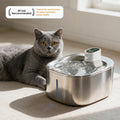
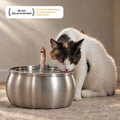
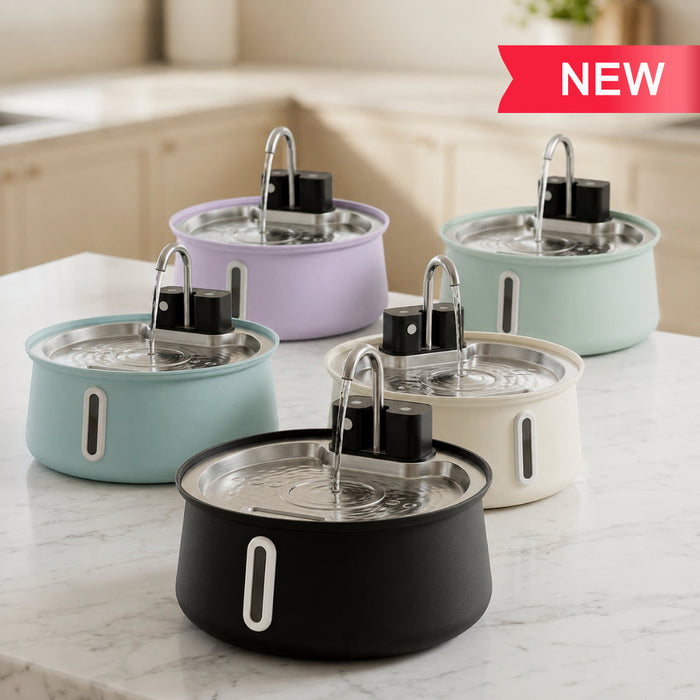
Keep as many cans as the budget allows; each one you remove shifts that much water onto the bowl. For the remaining kibble, a cordless option like the Wireless Cat Fountain 2.0 keeps water circulating, built from 304 food-grade stainless steel with activated carbon filtration and a pump under 25 dB.
An Automatic Smart Cat Feeder can then take over meal times and portion sizes for the dry food.
All outside figures here link to their original sources for you to verify.