






July 22, 2026
Cat UTI Symptoms: Emergency, Urgent, or Watch and Wait
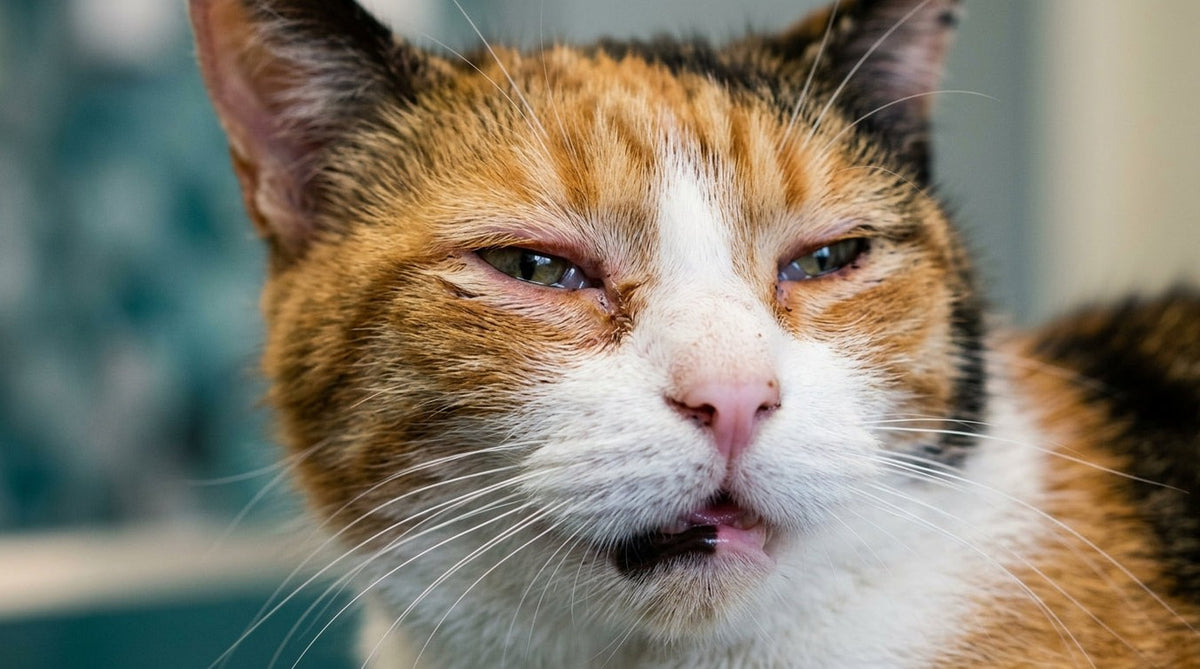
There is blood in the litter and your cat is straining in the box. Suddenly only one question matters.
Interpret the signs correctly and you may avoid a late-night dash to the clinic. Get them wrong and you could lose a night you never needed to lose.
Below we cover the nine signs worth knowing, and explain why infection is usually not the real culprit behind them. After that comes a simple three-level triage so you can decide whether to act tonight or wait for daylight.
Nine Urinary Warning Signs Every Cat Owner Should Know
Of all the cats who show these signs, only a small fraction turn out to have bacteria in the bladder, and that fraction shrinks further in cats younger than ten. Every condition on the list below can produce the same nine signs, which is exactly why home diagnosis is impossible.
What to look out for
The first three are what separate careful watching from a same-day trip to the vet.
- Straining with little or no urine. Your cat squats in the box and pushes, but no clump forms.
- Bloody urine, often pink or rusty. Owners tend to spot these drops early, and inflammation is the usual reason behind them.
- Going again and again. Trip after trip to the box, sometimes several in an hour, with only a little each time.
- Peeing outside the box. Bathtubs and piles of laundry become targets because the box itself now feels linked to bladder pain.
- Crying in the box. Meowing mid-squat signals genuine pain, and for male cats it ranks among the strongest hints of a blocked urethra. A cat that cries while straining needs to be seen today.
- Licking the genital area around the urethra far more than usual. This change is often nonstop.
- A strong, ammonia-heavy smell from the litter that is sharper than normal for your cat.
- Playing less and hiding more. Of all nine signs, lethargy is the most subtle and the one owners overlook most.
- Loss of appetite. One skipped meal can be normal, but two skipped meals together with any urinary sign above is not.
These signs seldom appear one at a time. Most cats show two or three together because the bladder lining and urethra become inflamed at once, whatever started it. When bacteria are involved and travel up to the kidneys, pyelonephritis can damage the kidneys suddenly, and that risk is a good reason to get a urine sample tested sooner rather than later.
The challenge is that cats are very good at hiding pain.
When feline lower urinary tract disease flares, crying and heavy licking are often the only ways a sick cat can tell you. The next section sorts the signs that can't wait from the ones that can sit until the morning.
The Hydration Gap That Sets Cats Up for Urinary Trouble
Cats generally take in less water than owners believe, and the urine reveals it well before anything else does.
Less water going in means more concentrated urine coming out. That aggravates a lining that is already irritated and creates ideal conditions for crystals, and you can influence it from your own kitchen.
How much your cat drinks each day is something you genuinely control at home, and vets regularly rank it alongside diet and stress management as a key part of prevention.
Moving water versus a still bowl
Moving water tempts a cat to pause and take a drink. For a cat that has been getting by on the minimum, going from roughly six drinking visits daily to ten is really all you are aiming for.
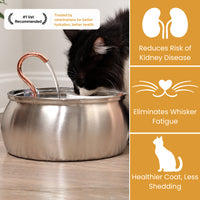
Our Wireless Cat Fountain 2.0 doesn't need an outlet, so you can place it in the quiet spot a sore cat prefers instead of next to the kettle.
The aim is more dilute urine, and that only happens when your cat actually drinks more.
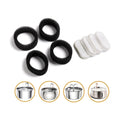
The fountain's water-contact parts are 304 food-grade stainless steel. Every wet surface eventually grows biofilm, but plastic scratches and pits much more easily than steel, and those tiny scratches are where the film settles in. Stainless steel is non-porous and the steel parts are dishwasher-safe, so a full clean takes under 5 minutes. Activated carbon filtration and a pump under 25 dB keep the water fresh without adding noise.
If you have been running the faucet for your cat every morning, this is the easier fix.
Take a look at the stainless steel Wireless Cat Fountain 2.0.
Emergency or Not? Sorting Symptoms Into Three Tiers
Read through the levels in order and use the first one that describes your cat. When you can't decide between two, go with the more serious.
Tier 1: Phone the emergency clinic right away
Hours of straining with no urine at all must never be put off, whatever else you read here. Treat it as a blockage, particularly in males, whose narrow urethra can seal shut entirely, and head to a clinic. Without relief, a blocked cat can die within 24 to 48 hours.
Other warning signs of a urinary blockage:
- Vomiting that has nothing to do with food or hairballs
- A swollen or firm belly near the bladder with obvious discomfort
- Pain when you press gently on the belly over the bladder
- Collapse or deep lethargy, with the litter box still dry
If even one of these appears with the straining, phone the clinic now. Clearing a urethral plug means a catheter and pain control the same night, and often a hospital stay on fluids, given either under the skin or through an IV.
Tier 2: Book a visit if things aren't improving
Lots of trips with very little output. Bloody urine, or some mild discomfort away from the litter box, in a cat whose appetite is still normal. For a male cat, treat this as one tier higher, since an early partial blockage looks identical.
This is the classic lower urinary tract picture in adult cats without signs of blockage, and cystitis explains it far more often than bacteria do. Ask your regular clinic for an appointment today or first thing tomorrow, rather than paying urgent-care prices.
Tier 3: Monitor overnight
A single accident outside the box or slightly more licking near the urethra, and nothing else that worries you.
Keep an eye on your cat for 24 hours and write down any change in behavior. Move up a level as soon as any Tier 2 sign shows up.
Print or screenshot this triage. The first hour after you notice a sign is the one that shapes everything after it.
The Real Reasons Behind Urinary Signs in Cats
Vets file all of these overlapping problems under a single name, FLUTD, which stands for feline lower urinary tract disease.
That label is a category, not a diagnosis. Three different problems fall under it, and the urine sample is what tells them apart.
Bacterial UTI
Here bacteria have genuinely infected the bladder or urethra, and antibiotics are the treatment. Older cats with diabetes or an overactive thyroid get it more often than young, healthy ones.
Feline Idiopathic Cystitis (FIC)
FIC is bladder inflammation without an identifiable cause. In cats under ten, it is the most common reason for the symptoms listed above. Stress is the leading suspect, and new pets, boarding and moving house have all been reported to trigger episodes.
FIC is treated with changes to the environment plus pain relief, not antibiotics. Most flare-ups calm down within one to two weeks, and vets rely on lowering everyday stress and boosting hydration to push the next one further away. Because FIC tends to come back, lots of cats go through it more than once and need a long-term plan rather than a single round of treatment.
Bladder Stones, Crystals and Blockages
A urolith is a hard stone that forms in the bladder when minerals in the urine become too concentrated. Crystalluria simply means small mineral particles show up in a sample, and on its own it is frequently a chance finding that needs no action. Both the pH of the urine and its mineral load shape which crystals appear, and prescription urinary foods are designed to adjust exactly those things.
If a stone slips into the urethra, it can plug it entirely, and that is the Tier 1 emergency described earlier. Risk increases with age and weight, and Persians and British Shorthairs appear more frequently than other breeds.
A senior cat already living with kidney disease can't absorb setbacks as easily, so call the vet earlier for these cats.
After the Diagnosis: Treatment and Preventing a Repeat
At the appointment, expect a hands-on exam followed by complete urine testing. If bacteria are suspected, the team collects a sterile sample through cystocentesis. That sample is sent for a urine culture to identify the bacteria behind the infection.
Treatment depends on what the urinalysis and culture show. A proven infection is treated either with antibiotic tablets or with one Convenia shot, which keeps working for roughly seven days.
Cats who are too unwell to eat get fluids under the skin while at the clinic, and the most serious cases are kept overnight on an IV drip to protect their organs. A straightforward bacterial infection usually clears in five to seven days, with pain relief given during the antibiotics.
When infections recur or become chronic, vets repeat the urine culture about two weeks after the final antibiotic to confirm it has truly cleared.
Preventing the next episode
Prevention is not glamorous: dilute urine, a clean litter box, and a cat who isn't holding it in. Adding one wet meal a day does more for the first goal than any amount of coaxing at the water bowl.
Keeping the litter box clean matters a great deal as well. Cats avoid dirty boxes and hold their urine, which makes it more concentrated and increases the odds of a repeat.
When episodes keep coming back, some owners ask their vet about adding a urinary support supplement. Always check with your vet first if your cat is on a prescription urinary diet, since both work on the same urine chemistry.
Owners often wonder about bone broth, glucosamine, chondroitin or a daily probiotic, but the evidence for any of them in cats is weak. Avoid apple cider vinegar: making the urine more acidic when you don't know which crystals are present may backfire.
Spot problems early and use the tiers above to decide how fast to act. Make sure your cat drinks daily from water that is clean and fresh. These steps can't guarantee there will never be another flare-up, but they give you an earlier heads-up and remove one thing working against your cat.