






July 22, 2026
Bringing Home a Cat Diagnosed With Urine Crystals (30 Day Plan)
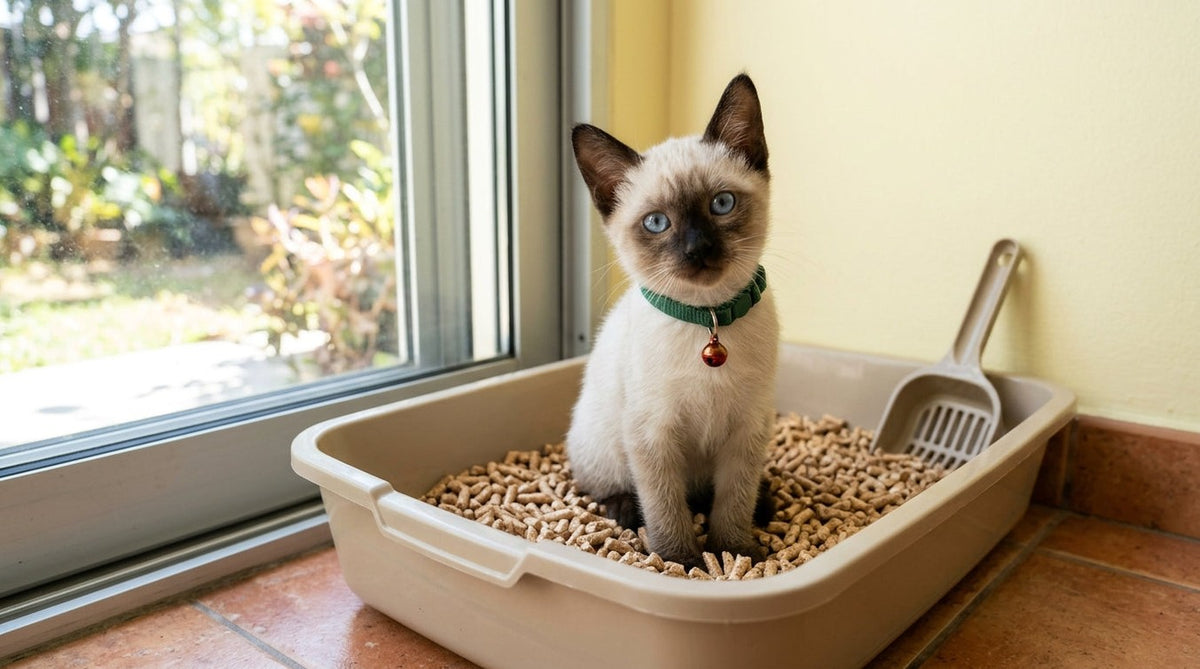
You left the vet a couple of hours ago, the paperwork says your cat has urine crystals, and your mind is still racing.
Your cat is hiding under the bed, and you're holding a bag of prescription food you never expected to buy. Most of week one is practical logistics, and it's far more manageable than that discharge sheet suggests.
Below, we walk through those thirty days one week at a time.
Here's what you'll be managing:
- Switching to the urinary diet
- Setting up hydration
- Deciding about supplements
- Recognizing warning signs
- Planning for the long term
Your First Evening Home
Tonight, focus on three things: the prescription food, fresh water and the litter box.
Get those stable by morning and you've handled the toughest part of this diagnosis. It gets easier after week one.
Put the new food in a clean bowl tonight, and from now on, offer nothing else.
Check the rest of the house too. If other cats live with you, move their food to a separate room. Even a single bite of the wrong kibble undermines how the urinary diet brings overly alkaline urine back into a safe pH range.
Some owners also try supplements. One Reddit user credited a D-mannose product with three crystal-free years for their cat. That's encouraging for one cat, but it isn't evidence, and that cat stayed on a urinary diet the whole time.
Place water where your cat already spends time tonight. Several water stations are better than one perfect spot, because a recovering cat should never have to make an effort to find a drink.
Do the same with litter boxes. Add a second one if you have more than one cat, and jot down tonight's visits and any straining, since your vet will ask for that count.
Changing the Diet, and Why Results Take Months
Clinics rarely mention the timeline. Struvite typically needs two to three months to dissolve, so the first recheck is a progress update, not a final verdict.
That timing gap matters for crystals.
It matters most because calcium oxalate works differently. Those stones don't dissolve with anything, so they're removed surgically or flushed out, and the diet's role afterward is preventing new ones. Struvite is the type that responds, so the waiting applies there.
The Realistic Two-to-Three-Month Timeline
Struvite forms in alkaline urine. When urine shifts alkaline, the magnesium and phosphate present can no longer stay dissolved.
Those minerals then come out of solution as struvite crystals in the urinary tract.
Prescription urinary diets work by lowering urine pH and reducing the minerals that fuel crystal growth. As those values return to normal, existing struvite dissolves.
In that same Reddit discussion, another owner reported that their vet estimated two to three months on the diet before the crystals would really dissolve.
Calcium oxalate crystals won't dissolve through diet alone. If lab results show calcium oxalate, expect imaging and possibly removal, along with long-term dietary changes.
The Cornell Feline Health Center offers a helpful overview of feline lower urinary tract disease covering both crystal types and FLUTD.
No Treats, No Exceptions
That Cornell resource explains why off-diet food is such a problem. A freeze-dried treat or a lick of tuna water stalls progress in a cat with crystalluria.
The reason is that consistency drives the effect. Every meal aimed at the same target shifts pH; anything off-plan sets it back.
One owner on Reddit summarized a study as showing that only the wet version of a prescription formula worked, while prescription dry food was no better than regular kibble. Treat that as one person's interpretation, since prescription dry diets do dissolve struvite in trials.
Many vets prefer the canned version of a urinary diet when the cat will eat it, mostly because the added moisture dilutes urine. Which format suits your cat is a discussion for your vet, not a fixed rule.
Canned formulas also tend to lower urine pH more reliably than dry versions.
Ask your veterinarian which form of the prescription diet best fits your cat's crystalluria and any history of FIC.
Helping a Low Drinker Take In More Water
Diet changes what's in the urine; water changes how concentrated it is. They tackle two sides of one problem, which is why neither works alone.
Without enough water, dissolving urinary crystals stalls.
That's tricky, because flushing the bladder relies on exactly the drinking habit many cats lack.
Going a whole day without water is an emergency in its own right, and our hour-by-hour dehydration timeline is worth saving. Being slightly underhydrated every day is just a slower form of the same issue.
How a Stainless Steel Fountain Helps
By around day four, rotating multiple bowls becomes hard to keep up. A fountain handles the constant fresh-water part for you.
During the first month you'll clean it more often than most owners do, and that's intentional. A larger reservoir means fewer refills, not fewer washes.
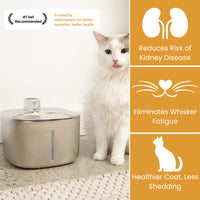
Our Wireless Cat Fountain 2.0 is made from 304 food-grade stainless steel, which matters here mainly because you'll be washing it frequently. It cleans in under 5 minutes, and the stainless parts are dishwasher-safe.
Water passes through activated carbon filtration on every cycle, and the wide, whisker-friendly bowl lets your cat drink comfortably for as long as she likes. Keep fresh replacement filters on hand.
If juggling water bowls is wearing you down, a fountain takes that task off your list. Prefer a larger reservoir? The 4L Stainless Steel Cat Fountain is another option.
Cranberry, D-Mannose and Astragalus: What the Evidence Says
The diet does its work at mealtimes. Some owners consider a supplement for the rest of the day.
Around week two, when the diet feels settled, many newly diagnosed cat owners start wondering about extra daily support.
Three ingredients show up again and again in urinary supplements. Cranberry has been researched for urinary health, mostly in humans, with a proposed anti-adhesion mechanism. Be clear on this: crystals are a mineral issue, so that mechanism targets infection, not crystals.
D-mannose is thought to act through the same anti-adhesion route, binding bacteria so they're flushed away instead of settling in the bladder. Most evidence comes from human research, and it's a supplement rather than part of veterinary treatment, which remains centered on the prescription diet.
Astragalus root, the third, is a traditional herb used for kidney support. Feline evidence is limited, so consider it a minor supporting ingredient rather than one with proven effects.
Always talk to your vet before adding any supplement, especially alongside a prescription diet, because anything that affects urine pH must work with the food, not against it.
If you do add one, taste matters. A cat already wary of its new food is more likely to accept something it perceives as a treat, and getting your cat to take things consistently is half the battle in crystal recovery.
Ultimately, the prescription diet plus steady water intake is what delivers a calmer first month. Any supplement is an optional extra to decide on with your vet.
When to Wait and When to Call
Recovery isn't a straight line. Good days alternate with quiet ones, and many evenings you'll watch the litter box sure something is wrong when it isn't.
Most of those moments are normal healing; a few aren't. Telling real warning signs from ordinary bumps is the difference between a calm follow-up and a midnight emergency trip for a urinary blockage.
Normal Parts of Recovery
Most cats need time to adjust to prescription food. Skipping a meal or eating more slowly in the first week is expected.
Sniffing the new food and walking off once is normal too, as is a quieter-than-usual cat.
Expect a few subdued days at first. A stressful vet visit plus a sore bladder affects mood before it shows in the urine.
Watching the litter box closely is normal for you as well. One owner on r/CatAdvice admitted still feeling anxious and checking the box after every visit to be sure their cat was peeing normally.
Signs That Need a Vet Immediately
Memorize this list. In male cats, the gap between a routine recheck and an emergency can be just hours:
- Straining in the box with little or no urine produced
- Crying out in pain while urinating, a frequent sign of urethral blockage
- Blood in the urine that persists beyond one bathroom trip
- Vomiting or refusing food for more than 24 hours along with straining
- Sudden lethargy or hiding in odd places, often a sign crystals are returning
If your regular clinic is closed, go directly to an emergency hospital. As one Reddit commenter pointed out, this is a very common issue in male cats, and catching it early makes a big difference.
Urethral blockage is the worst-case relapse. Untreated, it can be fatal within 24 to 48 hours, which is why it's the one sign here that never waits until morning.
Emergency care usually begins with a urinary catheter and sometimes an ultrasound, with antibiotics added if a secondary infection is present. Our guide to urinary symptoms in cats explains the urgency levels in more depth.
What's Permanent, What Changes, What Fades
By day 30, the worst is usually over. Your cat is eating the prescription food, drinking from her fountain and using the litter box normally.
Some changes become permanent; other parts of the routine relax as monitoring settles in and the urinary tract stays clear.
Lifelong Changes
The prescription diet is the most common permanent change. Most cats diagnosed with struvite stay on a urinary diet for life.
Calcium oxalate cases also require lifelong dietary management, keeping urine pH in a safe range to prevent new crystals.
Regular food raises urine pH again within days. Whether your cat can ever stop the prescription diet is a decision your vet should base on a urinalysis.
One owner on r/CatAdvice shared that after moving, a new vet took their cat off the urinary diet, and the cat later died; they stressed that the diet should be lifelong. We can't know the full circumstances, but the lesson is to ask which test result supports any change.
What Relaxes After Month One
Middle-of-the-night litter box checks are the first thing to fade, along with the anxiety before each follow-up urinalysis.
Policing every bowl in the house stops feeling necessary as routine takes over and pH stays stable.
A calmer monthly routine usually looks like this:
- Prescription urinary food at scheduled meals
- Topping up and cleaning the water fountain
- Any vet-approved supplement given at breakfast
- A quick daily look at the litter box
Questions for the Day-30 Recheck
Bring these five questions to the recheck appointment:
- What is my cat's urine pH on the current diet?
- When is the next urinalysis due?
- Are there less expensive prescription diet options?
- Is any supplement compatible with the urinary diet long-term?
- At what point should we consider imaging?
Post the answers on your fridge. A month ago this felt like a crisis; by the recheck, it's a routine you hardly notice.