

October 22, 2026
Evidence That Explains Why Your Cat Paws At Water
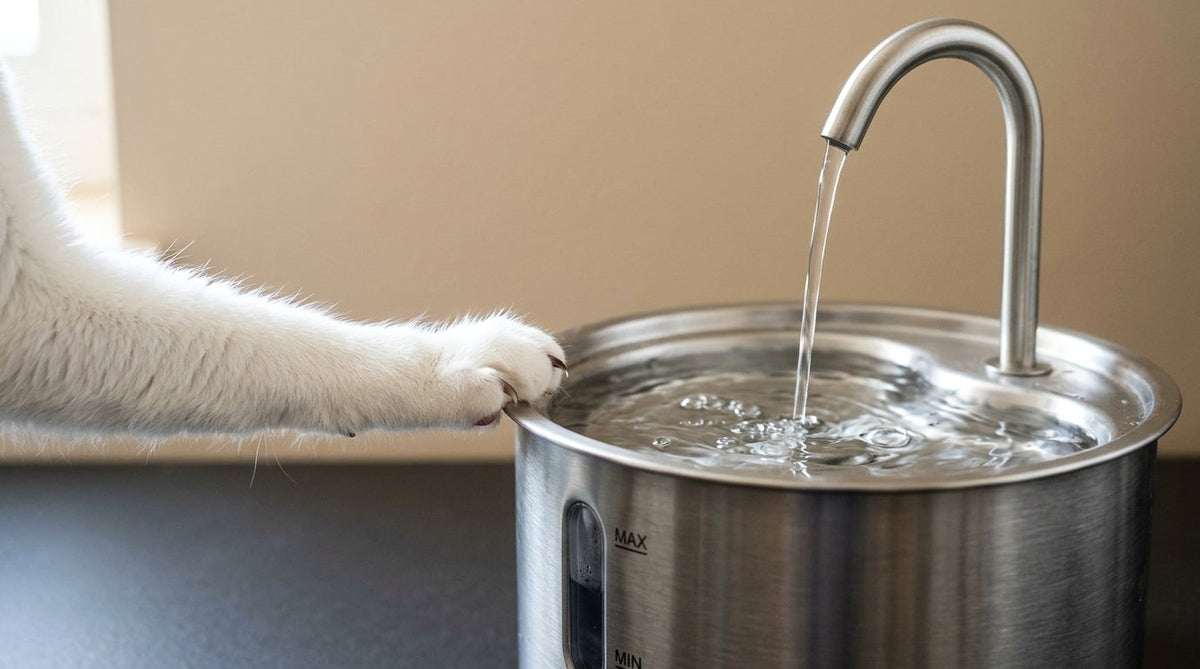
A calm water surface is oddly hard for a cat to make out at close range. Feline vision is tuned to catch motion in low light, and anything a few inches from the nose looks blurry. So a paw dipped into the bowl first may just be a way of finding where the water begins.
The habit itself has never been studied head-on, and poor close-up focus remains the best-backed theory. Some cats also seem to like their water moving, and a paw gets it moving. For the vast majority, it's a harmless quirk.
The one version that deserves a vet visit is pawing that appears suddenly in a senior cat, since it can hint at a sore mouth or rising thirst. Here we sort the explanations from strongest evidence to weakest, then cover a few bowl tweaks for owners who want drier floors.
| Behavior you notice | Probable cause | Section to read |
|---|---|---|
| Dips a paw after every refill | Locating the new water level | Close-up vision |
| Licks water off the paw instead of lapping | A preferred water type, or a habit from kittenhood | Preferences; learned habits |
| Flicks water all over the floor | Trying to stir still water | Fountains |
| Scratches or digs around the dish | Dish placed against a wall or beside food | Placement |
| Has always done it | Habit picked up young | Learned habits |
| New behavior in a cat over ten | Pain, poorer eyesight or more thirst | Senior cats |
Ranking the Explanations, Strongest First
Five everyday causes come first, led by the best-supported one, and the medical cause closes the list.
Close-Up Vision Is Weak in Cats
Cats gave up near focus in exchange for superb motion and low-light vision. A veterinary eye specialist from Jerusalem's Koret School estimates feline focusing power at only 3 to 4 diopters, while a human teenager manages roughly 15.
A clear, flat pool of water right under the face is therefore tough for a cat to gauge.
You'll see it most after you top up the bowl, or late in the evening once the level has dropped: paw first, face second.
Watch what follows. If the cat keeps sipping from its wet paw, the preference or habit explanations fit better. If it dips, withdraws and laps normally, it was just checking.
That check protects a delicate technique. Cats drink by touching only the tongue tip to the surface and pulling up a thin column of water, chin kept dry. Misjudge the surface and the nose gets soaked.
This is our top-ranked reason. The vision science is robust, even if nobody has yet filmed bowls to prove the connection.
Individual Cats Have Water Favorites
Moving water matters a lot more to some cats than others. In a trial involving 14 cats, researchers switched them between still, circulating and free-falling water. Group intake barely shifted, yet three cats clearly favored one setup, and each of the three chose differently.
Those cats were lab animals fed kibble, so pets may act otherwise. The lesson: preference is personal, and your dipper may simply be the opinionated one in the household.
Test it at home for a week. Leave the usual dish downstairs and a wide ceramic mug upstairs, and pencil the water line on both each night. Whichever drops faster wins. For more ideas, browse our list of extra places to offer water.
The Whisker Theory Didn't Hold Up
Asked by Boston Magazine about whiskers and bowls, Angell Animal Medical Center surveyed its veterinarians and concluded the idea wasn't real. Later, a study on whisker stress fed 40 cats from either a normal bowl or a wide, flat plate. Eating time and leftovers were the same either way.
Whiskers are sensitive organs, as our piece on whisker biology describes, and with free choice the cats did lean toward the flat plate. Offer a wide dish for comfort if you like, but it probably won't end the dipping.
Kittens Copy the Grown-Ups
Young cats imitate adults, drinking style included. A resident cat that loves splashing can pass that on to a curious kitten fascinated by ripples.
Ex-strays and ferals often have their own version. A cat raised drinking from puddles and narrow containers may dip, then wait for minutes before lapping, years after moving indoors.
When a cat has done this all its life, habit nearly always explains it and illness rarely does, so leave it be.
Paw Scent Marking: Least Likely
Cats do have scent glands between their toes, mainly used when scratching posts or floors. Whether they mark water bowls that way has never been tested, so it ranks last.
Scratching near the bowl is more often a response to where the bowl is, covered in the placement section.
New Pawing in a Senior Cat
When a cat past roughly ten suddenly starts pawing at water, read it differently. Pain, failing eyes and increased thirst can each alter how a cat approaches drinking.
Oral pain is the easiest to overlook, so rule it out first in a cat that has swapped lapping for pawing. In July 2026, the American Veterinary Dental College explained that chronic gingivostomatitis, a persistent inflammation of the gums and oral lining, causes severe pain that reduces appetite, grooming and social behavior.
Bumping its chin on the rim, or suddenly missing the water with its paw, may point to vision loss. Vets often check for hypertension in such cats, frequently alongside chronic kidney disease. A stiff, awkward crouch suggests something else again, and raising the bowl slightly relieves sore joints.
Thirst is easy to quantify. Intake above 100 ml per kilogram daily is called polydipsia, roughly 1.5 fluid ounces for every pound of cat. Fill the bowl from a marked jug at a fixed hour and log the amount used. Our article on ideal cat weight helps with the body-weight side.
Your vet will value that figure. Kidney guidelines revised in September 2026 suggest screening from age 7, and twice-yearly checks plus blood pressure after 10. If the pawing began abruptly, see your veterinarian before changing the bowl setup.
Bowl Changes That Reduce the Dipping
For a cat that has always paw-dipped, try these three tweaks if you'd like less splashing.
Keep the Water Line Constant
A level that sits high one day and low the next hands a surface-checker a new reason to test every time. Keep it steady: stick tape on the bowl's exterior at your target height and refill to it each morning with fresh water.
Still checking? A floating ice cube gives the eyes a reference point.
After any change, watch the tape for three nights. If the level hardly moves, the new arrangement has put your cat off, and our advice for a cat drinking less than usual comes next.
Give the Bowl a Better View
Crouch at your cat's eye level beside the dish. If you're staring at a baseboard or cupboard, the room is behind the cat, and scooping with a paw lets it drink with head raised, watching its back.
Pull the dish out so the drinker faces the room's entrance.
Move food away too. The feline environmental needs guidelines recommend separating water from food in all homes, and in multi-cat homes they warn against forcing cats to eat and drink right next to each other. That pressure may be exactly what a dipper in a crowded household is managing.
The giveaway is a cat scooping from the edge of a communal bowl, head up. A second dish on another floor, facing a doorway, eases the tension.
Let a Fountain Move the Water
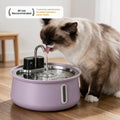
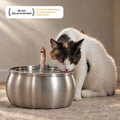
If your cat paws to create motion, a fountain does that job instead, so there's less reason to stir with a foot.
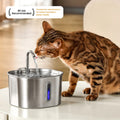
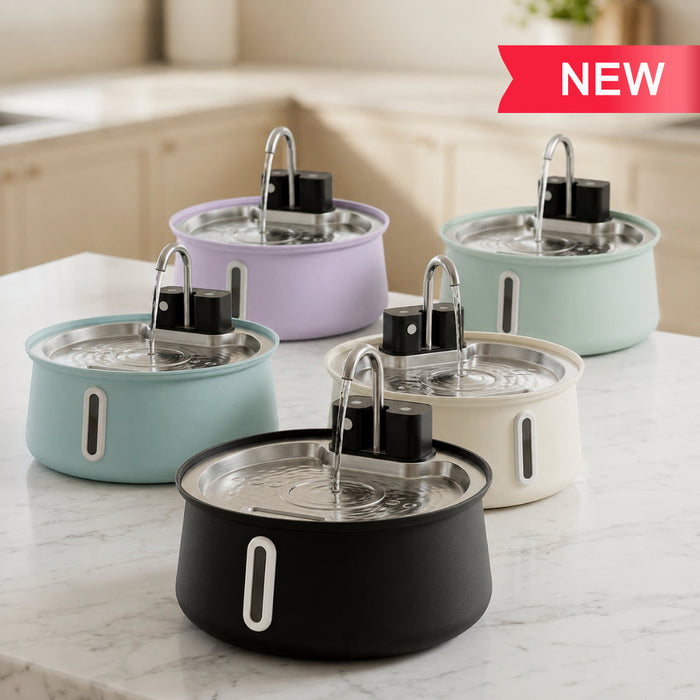
A curved, faucet-style spout lets a splash-lover sip right from the falling stream, and the motion makes the surface easier to see. Our comparison of fountains and bowls covers the switch in depth.
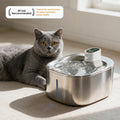
Place an Anti-Splash Silicone Fountain Mat underneath while your cat adapts. Our fountains use 304 food-grade stainless steel, activated carbon filtration and a pump under 25 dB. The Wireless Cat Fountain 2.0 offers a falling stream your cat can drink from directly.