



July 11, 2026
Fountain or Bowl: The Setup Your Cat Will Actually Use
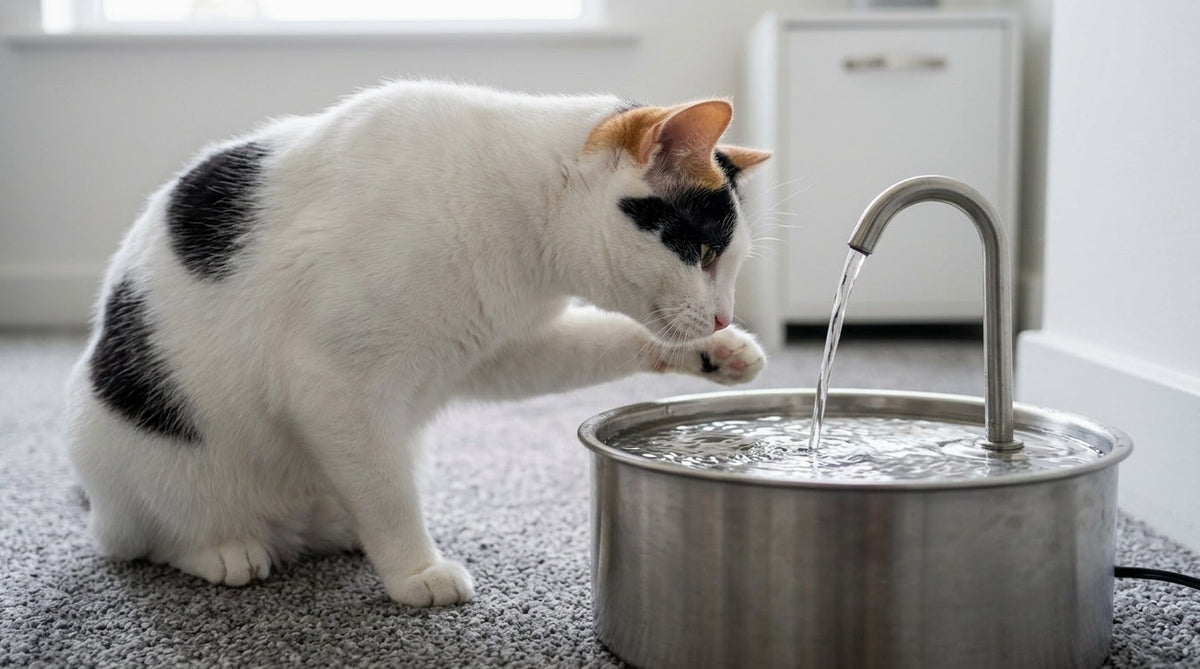
Choosing between a fountain and a bowl has little to do with which looks neater beside the fridge or slips more easily into a corner. The real answer depends on your particular cat, not on the equipment.
What matters is which one your cat actually prefers to drink from, and which one keeps it well hydrated. Having set up both for plenty of picky cats, I can say the pattern is pretty clear.
For most cats, a fountain wins, and the explanation is simple behavior. Cats drink small amounts many times a day, so a water source they visit more often adds up to more water overall. There is one situation where a bowl works just as well, and we will get to it below.
Fountain vs. Bowl in a Nutshell
The whole decision boils down to a single question: is your cat drinking enough?
| Factor | Fountain | Bowl |
|---|---|---|
| Encourages drinking | Typically more, since flowing water attracts cats | Only for cats that already drink well from still water |
| Freshness between refills | Remains fresh for several days | Turns stale and should be replaced every day |
| Cleaning | Dishwasher-safe stainless parts clean in minutes | Minimal, just a rinse |
| Sound | Cheap pumps may buzz; quality ones are near silent | Silent |
| Several cats | A single flowing source can serve a group | Requires multiple bowls around the home |
| Cost to buy and run | Higher, with filters as a recurring expense | Less expensive overall |
| Acceptance | Most cats, with hesitant ones won over by a gradual introduction | Nearly every cat, since it is familiar |
No option wins for every cat; it is about finding the best match for yours. If your cat already drinks plenty from a dish, stick with it. If your cat largely ignores still water, which describes most cats, a fountain fills that gap.
When I read through a lengthy online discussion among cat owners debating this very choice, fountain supporters were the most vocal. One said all of their cats and dogs adore theirs because running water beats still water; another loved that constantly moving water never goes stale.
Fountains also work well in a busy household. Where several cats live together, a single source of moving water can serve them all.
One owner with five cats and two fountains described the cats queuing up to use them.
That freshness benefit is bigger than it seems. Better fountains keep water circulating all day, which is a large part of why cats keep coming back to them.
Why Your Choice of Water Source Matters
This is about more than convenience. On their own, many cats drink a bit less than they need, and that shortfall grows quietly over the years. The container you choose is one of the easiest ways to fix it.
Staying well hydrated is a simple, everyday form of protection for your cat.
Why cats are wired to snub still water
Cats descend from desert hunters, so they come with a naturally weak urge to drink. In the wild, their prey supplied most of their water, since a mouse is largely moisture. A bowl of plain tap water was never going to excite an animal built this way.
Ignoring a full bowl is normal feline behavior, not stubbornness. The preference for running water dates back to when a still puddle was risky, often stale or contaminated, and your house cat still follows that ancient rule.
Food matters too. Cats eating kibble get very little moisture from their meals, unlike cats on wet food, so almost all their water has to come from drinking.
If your cat hardly touches its bowl, look at the usual culprits: the bowl's material and shape, where it sits, and how fresh the water is.
The long-term cost of drinking too little
This is why closing the gap matters. Chronically low intake strains the bladder and kidneys, and as many as 40% of cats older than ten develop chronic kidney disease. A bowl your cat rarely uses isn't harmless; it is a small risk repeated every day.
The bladder suffers as well. Cornell lists cats that take in less water among those most likely to develop lower urinary tract disease and recommends always having fresh water available. Ongoing dehydration makes urine more concentrated and can lead to urinary crystals, which are often harmless but can obstruct a male cat and become a same-day emergency.
Numbers make the argument, but personal stories drive it home. One owner of a cat with kidney problems explained that their cat drinks heavily and used to prefer the bathtub faucet, and has had fewer health issues and less chin acne since switching to a fountain.
None of this replaces a vet visit. If your cat's drinking suddenly rises or falls, talk to your veterinarian before making changes, because it may point to a condition that needs treatment.
A Fountain Designed Around the Common Complaints
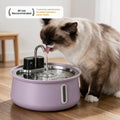
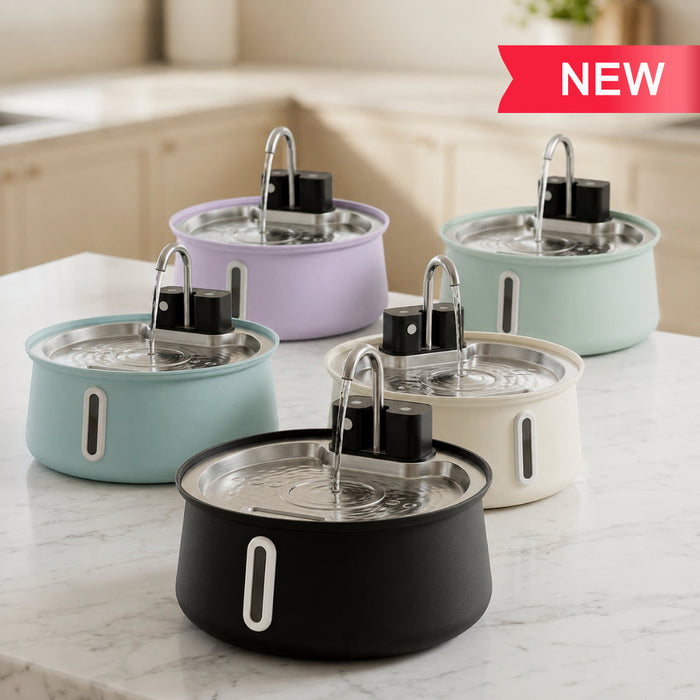
Two things tend to discourage people from fountains: noise and maintenance. A well-designed fountain addresses both. Ours has a pump under 25 dB, and its stainless steel parts are dishwasher-safe. Cleaning takes under 5 minutes, a small price for a cat that actually drinks.
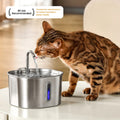
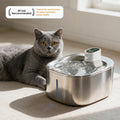
Material is more important than many people realize. Plastic fountains absorb smells and develop a slippery film that turns cats away, while stainless steel stays neutral and rinses clean easily. Fresher-tasting water is a major reason cats keep coming back to a steel fountain.
The pump is quiet enough not to bother even an anxious cat, and a wide basin keeps whiskers from brushing the sides, which some cats appear to dislike, so your cat can drink comfortably.
The moving water does the convincing. A faucet-style stream is designed to make drinking more inviting than a still dish.
If your bowl sits half-full and untouched by the afternoon, you already have your answer. Water that is filtered through activated carbon and keeps circulating stays attractive much longer than a dish left standing for hours. Try the Wireless Cat Fountain 2.0 and see how your cat responds.
When Sticking With a Bowl Makes Sense
Here is one honest exception, and it is the bowl's one clear advantage. If your cat already drains its dish every day, there is nothing to fix. Not every cat needs an upgrade, and that is perfectly okay.
As one owner put it in an online discussion, if your cat happily drinks from a bowl, especially a stainless steel one, there is good reason to keep using it.
If that sounds like your cat, make the bowl as inviting as possible:
- Choose stainless steel or ceramic over plastic, which can harbor bacteria and contribute to chin acne.
- Go for a broad, shallow bowl so whiskers don't touch the rim.
- Place it carefully, well away from food and the litter box.
- Replace the water every day to keep it fresh.
Even so, most cats that drink from bowls drink a bit more once a fountain is added, simply because fresh, moving water is more appealing. A ceramic fountain is a quiet, hygienic step up, and stainless steel goes further by avoiding the mold and slime owners often report with plastic.
Another owner noted that their stainless steel fountain is easy to clean in every corner, needs only regular filter changes, and is a hit with their cats.
Take a look at our 4L Stainless Steel Cat Fountain and 2.2L Stainless Steel Cat Fountain to see how they compare with a basic plastic model.
Moving a Bowl-Devoted Cat to a Fountain
A cat that stares in puzzlement at a burbling fountain hasn't rejected it yet. Most cats come around with a gradual introduction instead of an abrupt switch.
Begin by setting the fountain beside the old bowl so nothing is removed. Use the quietest pump setting at first, since noise is the number one reason cats shy away.
One owner discovered exactly that: once the noisy part was dealt with, their cats loved the fountain so much that they added a second one in the bedroom.
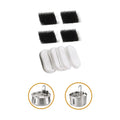
A fresh filter keeps the water tasting right, so change the carbon cartridge on time, especially during the first few weeks; you can find replacement filters here. A fountain with a large reservoir also means fewer refills while your cat gets used to it.
Allow two weeks before deciding how it is going. And don't introduce it right before a trip; let your cat get comfortable with it well ahead of any travel.
Common Questions About Fountains and Bowls
Are cat fountains vet-recommended?
Many vets support them. A fountain isn't a prescription and no vet will oversell one, but most are happy with anything that helps urinary health by raising daily water intake. If your cat already empties a bowl without fuss, expect a shrug rather than a strong push.
Is a fountain a must for cats?
Technically, no single product is essential. Still, most indoor cats don't drink enough, and a fountain is the most dependable way I have found to change that. For a cat that walks past a full bowl, it is the solution, and a simple daily boost to its wellbeing.
Do fountains beat bowls overall?
For most cats, yes. Judged on how much a cat drinks, the fountain comes out ahead because more cats use it more often. A bowl only matches it for cats that already drink plenty, and they are the minority.
Is stainless steel better than plastic for a fountain?
Stainless steel is easier to keep clean and doesn't develop the biofilm plastic does. For a picky cat or one prone to chin acne, that alone can settle it.
Whichever you choose, the goal is the same: a cat that drinks enough. If yours keeps walking away from a full dish, that tells you which setup you need. Keep the water source clean, and call your vet if your cat's drinking habits change suddenly.