









September 29, 2026
Signs A Cat Is Pregnant And What To Do Next
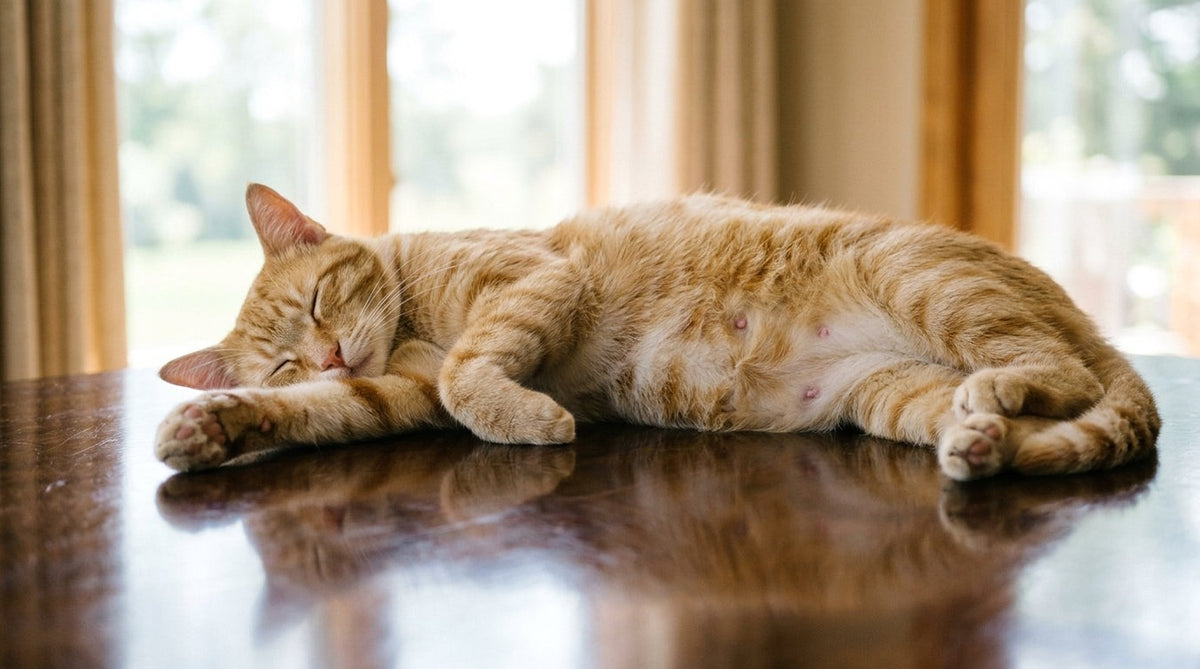
Dependable pregnancy signs in cats appear in a fairly set sequence, and the first one you can actually see is a change in her nipples. From about day 16 they become pinker and more prominent, long before her body shape hints at anything. Most other things owners watch for either arrive much later or prove little by themselves.
"Is my cat expecting?" is a very common question. Below are the few signs that carry real information, how long feline pregnancy lasts, and what to do while you wait to find out.
Signs Worth Trusting
Many owners rule out pregnancy because their cat still seems like a kitten. But International Cat Care places sexual maturity at roughly four months, so a cat who still looks and acts young can already be carrying kittens.
Here's what to look for.
Nipples Change Color Around Day 16
Nipple changes are your earliest clue. PetMD lists them among the first indications and places the change at about days 16 to 20. Breeders call this "pinking up."
It isn't just one source saying so. International Cat Care also names it as one of the earliest changes owners notice, and two independent organizations agreeing deserves weight.
The reason is straightforward: as hormones shift, blood flow to the mammary tissue rises, and that shows up long before her silhouette changes.
Hunger and Napping Prove Little
By contrast, the signs owners fixate on are the weakest. Extra sleep appears on nearly every symptom list; CareCredit includes it because pregnancy is demanding and increases energy use. Still, it's an odd thing to look for in an animal that already sleeps about two-thirds of the day.
Appetite shares that problem, although its timing is genuine. Arden Grange's breeder advice says expectant queens typically start gaining weight and eating more around the second week of gestation. But cats also eat more when cold, bored or simply offered bigger portions.
Extra affection falls in the same category. Treat all three alike: each is a prompt to check her nipples, and none is grounds for certainty.
Length of Feline Pregnancy
The usual answer is 63 days, but that's an average, not a due date to plan by. Real gestation spans a wider range.
VCA Animal Hospitals gives a typical length of 63 to 65 days, with a possible range of 58 to 70.
Weeks One to Three: Nothing to See
Take the early part of that timeline seriously, because almost nothing visible happens. PetMD describes the first trimester as showing little or no change most owners would notice during those first three weeks.
This matters because of how owners react. They look at a normal-looking cat and decide she can't be pregnant, yet a cat who appears unchanged at day 18 may be carrying five kittens still too tiny to alter her shape.
Weeks Four and Five: Getting Heavier
Around halfway through she starts to feel weightier when lifted and looks rounder from above. Most owners notice this stage, and it's a good moment to stop guessing and start preparing.
Two things cause it: fetal growth accelerates in the second half, and she builds up body reserves that nursing will later use.
Week Six Onward: Kittens Can Be Counted
At about six weeks you can learn how many kittens to expect, the first truly practical piece of information. CareCredit explains the timing: X-rays only show kittens once their skeletons mineralize around week six, and radiographs are the best method for a count.
Ultrasound answers sooner but differently. According to CareCredit, it can confirm pregnancy from three to four weeks, though it won't give a reliable number.
Get the count before the birth. If you expect five and four have arrived, you know labor isn't over.
Last Two Weeks: Nest Hunting
Near the end her behavior shifts noticeably. She'll look for a quiet, enclosed spot to deliver, usually not one you'd choose, and she'll groom her belly and rear end more often.
Owners often mistake nesting for an early hint. It's actually the final stage, so if she's nesting, you're counting days rather than weeks.
Reading Her Belly Week by Week
Everyone watches the belly, photographs it and compares it to online pictures. Yet it's the least reliable indicator of all.
The Bump Arrives Late
Through roughly the first half, her abdomen looks ordinary, then changes fast. Most fetal growth happens in the last third, so visible change is crammed into the final couple of weeks.
Assessing early pregnancy by shape means judging by the one thing that hasn't happened yet. That's how owners end up sure their cat isn't pregnant because she looks normal at week three, and they're right that she does.
Number of Kittens Drives Belly Size
Litter size complicates things further. Belly size reflects how many kittens she's carrying at least as much as how far along she is, and litters vary widely. Agria says four to six kittens is normal on average, though anywhere from one to twelve isn't unusual, and adds that young cats, particularly first-time mothers, tend to have smaller litters.
CareCredit cites the same four-to-six average and the same point about first litters. Combine the two and a queen with three kittens at week seven looks nothing like one with nine.
That explains much of the confusion. First-time mothers carry fewer kittens, and their owners assume the dates are off because the belly is far smaller than the photos they've been comparing.
So belly size isn't a calendar. A small bump doesn't mean early pregnancy, and a huge one doesn't mean overdue; it usually just means a bigger litter.
Looking After Her for Nine Weeks
If she is pregnant, most of her needs during these weeks are ordinary. The strongest urge many owners feel is the one to hold back on.
Don't Increase Food Too Early
This is the most needed correction. VCA states plainly that in the first two trimesters a pregnant cat's nutritional needs match those of a young adult.
Feeding extra early offers no benefit and may cause harm. VCA notes that obesity can reduce the number of eggs released during ovulation, leading to smaller litters.
Late overfeeding also increases the chance of a difficult delivery. Owners mean well but direct the extra food at the wrong stage.
Hold the increase for later. Arden Grange recommends raising portions gradually as pregnancy advances, reaching about 25 to 50 percent more than usual by her due date.
Water Needs Climb While Nursing
Water follows the same late schedule, and the reason is useful. Arden Grange emphasizes that good fluid intake is essential for producing enough milk, which is 78% water.
So her biggest need comes late. VCA says milk output peaks three to four weeks into nursing, long after most owners have stopped watching closely. If her drinking falls off, our article on a cat that has stopped drinking lists the warning signs.
The real issue isn't quantity but location. A nursing mother won't abandon newborns to walk across the house, so a kitchen bowl is effectively unavailable. Move her water source, whether a bowl or a stainless steel cat fountain, into the nesting room while she's still happy to walk to it. Our article on how long cats can last without water explains why this matters.
Set Up a Private Birthing Spot
Choose the birthing place before she does. As delivery nears, queens seek seclusion, which is why an unguided cat ends up under a shed or behind a wardrobe.
A cardboard box lined with old towels, placed in a room with little traffic, works well. The two needs pull in different directions: it must feel hidden to her yet stay reachable for you. Helping her feel secure follows the same principles as keeping indoor cats content.
Bleeding or Discharge Is Urgent
One situation can't wait for a routine appointment. PetMD is clear that discharge, especially blood, is abnormal at any point in pregnancy and needs a same-day vet visit. Straining or visible discomfort warrants the same urgency, and our guide to feline urinary symptoms explains why.
Everything else can be handled over a few days. That one means calling your vet today.
Getting a Definite Answer
Careful observation only takes you so far, and the limit comes sooner than people think. Eventually you need a professional answer, since early signs are hard to interpret during the first month.
When a Vet Can First Detect It
Going too early wastes the trip. Palpation, gently feeling the abdomen, comes first; PetMD places it at around two and a half weeks. Ultrasound can show kitten heartbeats from three to four weeks.
Before then, neither method has anything to detect. The embryos are too small to feel and have no heartbeat yet, so timing the visit matters almost as much as booking it.
Home Observation Can't Confirm It
No home test exists for cats. Your own observations hint but never prove, however carefully you look, because every visible sign can also come from ordinary weight gain. Watching harder won't bring certainty.
It's far better to phone your vet and describe what you're seeing than to spend another two weeks watching. A vet can examine her, scan her and eventually give you a kitten count, none of which an article can do.
Checking at home is worthwhile but shouldn't be trusted on its own. Knowing the signs gets you to the appointment, and one visit resolves what weeks of watching can't. She'll need transporting, and our tips for traveling with cats apply even more to an expectant mother.
If your observations and your vet agree, you have a few weeks to prepare, and our kitten supplies checklist covers what you'll need once the litter arrives.