






October 22, 2026
How Cats Show Affection Through the Day
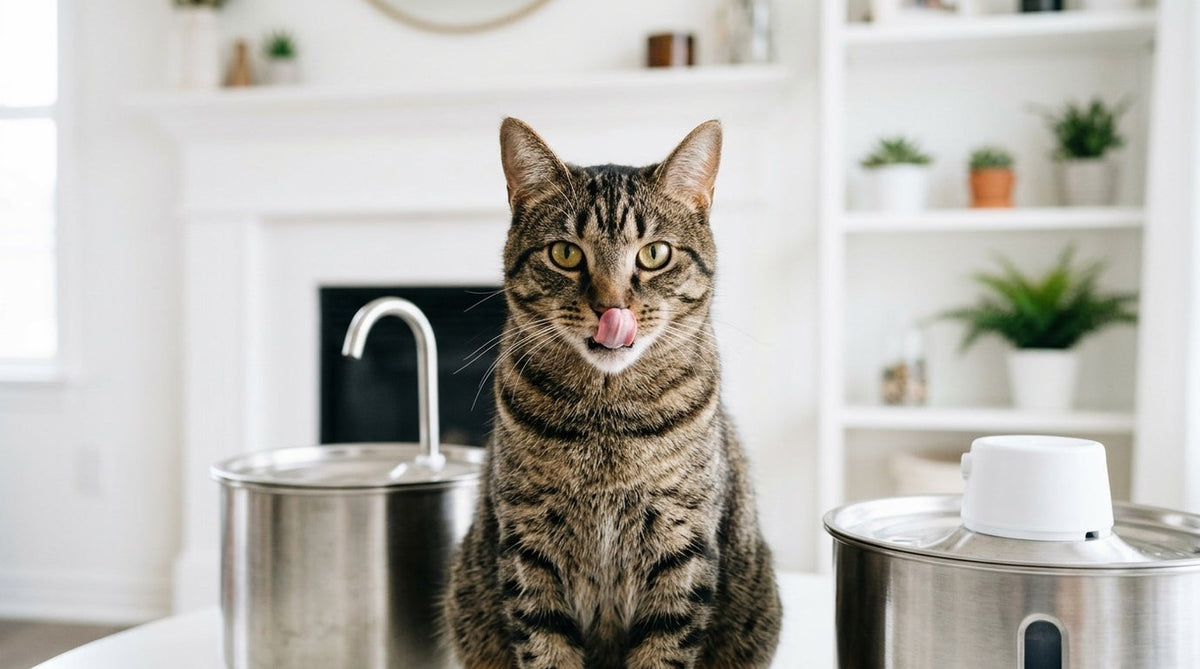
Feline love is mostly quiet, and much of it shows up while your cat is simply passing by. That upright tail as it trots toward you? Affection. The sleepy, slow blink it sends from the far side of the room? Also affection.
A cat may welcome you home, vanish for the evening, and still be firmly bonded to you. Reserved cats just express it at a lower volume.
Below, we follow the signs through an ordinary day and pair each one with a reply your cat will actually understand.
Morning to Night: Where the Love Appears
Cats know their own person from a visitor. Many are securely bonded, and they look to that person for reassurance whenever a stranger or a strange new object turns up.
Hello at the Front Door
A tail pointing straight at the ceiling as your cat heads your way is the most cordial welcome felines offer. They give that same raised tail to cats they like, and it tends to come with a rub along your shins. Together they form the friendly half of a homecoming.
Frantic grooming or a full-body shake by the door, on the other hand, usually means your cat is releasing nervous energy.
Lots of cats add a trill or chirp. If yours is chatty all day long, see our article about talkative cats and what their meows mean.
Treat the greeting as the invitation it is. Get down to eye level, say your cat's name, and let it sniff your hand before you start on anything else.
Forehead Pushes Once You Settle
Sit down and your cat may press its forehead firmly into your palm, picking the timing and the pressure itself. People call this headbutting or head bunting. It often seems to happen the instant a laptop opens, which hints at what your cat considers its rival.
This is the contact your cat is requesting, so let it steer. Cat-controlled touch may even matter for the body: a small 2026 study that followed twenty pet cats tied passive contact led by the cat to rising oxytocin and falling cortisol, and found the reverse when handling was forced.
Reply by keeping your hand motionless so your cat can drag its own cheek across your fingers. Behavior expert Lauren Finka's petting advice is to stop briefly every 3 to 5 seconds, giving the cat a chance to ask for more or not.
Scent glands cluster around the cheeks, chin and face, so rubbing there goes over far better than patting the back. Strokes close to the tail base tend to provoke a much grumpier response.
A good habit: three or four strokes, a pause, and the cat chooses whether a fifth comes. A tail smacking the cushion means stop, and ignoring it often gets you a so-called love bite. Vets call that petting-induced aggression, and we explore it further in our guide to cat bites.
The Shadow That Trails You
When your cat drifts after you from kitchen to bathroom, or settles in whatever room you pick, it is staying close to someone who matters. Cats track where you are in the house even when you are out of view.
This affection expects nothing. Your cat simply likes being near, so it appears on the bath mat or your warm office chair moments after you get up. It may look clingy, yet in a confident cat it is plain attachment.
No reply is needed here. Just let it happen.
Eyes That Close Slowly
Lock eyes with your cat from a distance and you may watch the lids sink, pause, and lift. That drowsy half-close signals trust aimed at you, because a cat that feels uneasy keeps staring at whatever worries it.
Return the gesture. Narrow your own eyes gently, and research shows your cat grows likelier to blink back and approach you. Across the couch, one slow blink often earns another in reply.
Showing the Tummy
Stretching out belly up next to someone is close to peak relaxation for a cat. It often happens on a sunny patch of floor, within reach of a favorite human.
Take it as praise and keep your hands near the head. Then watch for ears swiveling outward or a tail beginning to thump, cues that even experienced owners misread.
Reach for the tummy and you may find a wrist grabbed by four sets of paws, the famous belly trap. A minority of cats genuinely love a belly rub and stay still to prove it.
Such swats are rarely random. Calling them spite tends to make owners react more harshly, and that only makes another swat likelier.
Bedtime Purrs and Kneading
Back from a weekend trip? Expect extra neediness that first night, since cats often seek more contact after a separation. Many do it in bed, sometimes by sleeping right on top of you. Kneading frequently starts things off, and our article on the reasons behind kneading traces that habit to kittenhood.
Grooming may follow, with your cat licking your fingers or hair as it would a feline friend, purring all the while.
Keep one caution in mind with every purr: cats purr when hurting too. A purring cat that has started hiding, skipping food or abandoning its routine belongs in the health section further down.
Reserved Cats Love More Softly
Personality Sets the Touch Level
Some cats want a lap for an hour; others just want you somewhere in the room. Carly Moody, who runs UC Davis's Animal Welfare Epidemiology Lab, noted in an 8 October 2026 interview that cats vary enormously in sociability, toward humans and toward each other.
That variation persists even when attention is on offer. Surrounded by willing humans, plenty of cats spend long periods ignoring everyone, and that is normal. A cat that rotates one ear toward your voice with its eyes shut still knows exactly who is speaking.
It is responding without getting off the cushion.
A cat perched high on a bookshelf, watching, is showing normal caution, and the high spot still keeps you in its sight line.
Distance Is the Cat's Choice
Dozing a few feet off is your cat choosing a comfortable amount of closeness. Proximity alone counts as affiliative, or friendly, behavior. The cat at the opposite end of the sofa is still keeping you company.
Plopping a shy cat onto your knees usually drives it from the room. Less cuddly cats cope badly with handling they never asked for, so drape a throw over the sofa arm and let yours inch closer when ready.
That patience is itself a loving act. For more on gestures that land, read our post on what kisses mean to cats.
The Quietest Human Gets Picked
Many cats bond hardest with the most relaxed, least demanding member of the household, often not the one handling food and vet visits.
If your cat prefers someone else, that does not reflect badly on you, and its deepest attachment may still be yours. Our article on how a cat picks its favorite human explains why calm, predictable people usually come out ahead.
Changes in Affection That Warrant a Checkup
You know your cat's baseline: its greeting spot, whether it joins you at bedtime, how much petting it allows. A shift in those habits, especially in an older cat, is often the earliest clue to an illness cats are experts at hiding.
If reaching your lap now takes two hops, chair first, the cause may be soreness rather than coolness. A July 2026 YouGov poll run for Zoetis Australia found 51% of owners unaware that cats get osteoarthritis, and a quarter blamed signs such as slowing down on simple aging.
| What you see | Possible cause | Next step |
|---|---|---|
| A former lap lover no longer jumps up and avoids petting | Sore joints, such as osteoarthritis | Book an exam and tell the vet petting has changed |
| Newly clingy, noisier, unsettled overnight | Hyperthyroidism or cognitive dysfunction | Book an exam, especially for cats over ten |
| Hides, swats at touch, purrs while withdrawn | Pain from illness or injury | Get to the vet soon |
| Less interested in you, plus more drinking and peeing | Kidney disease, frequent in older cats | Visit the vet and request bloodwork and a urine test |
A sudden hunger for your company feels lovely and is easy to dismiss. AAHA's senior care guidelines name more interaction than usual as one early change vets look for in aging cats, so mention it at the next visit.
Grab thirty seconds of phone video. A cat frozen on an exam table can't demonstrate its new couch behavior.
Put Water Where Your Cat Already Rests
If your cat dozes on your office chair during work hours and follows you to the sofa at night, a kitchen water bowl sits out of the way most of the day. That's true for cuddly and aloof cats alike. Water placed a few feet from a favorite nap spot gets visited more, and frequent small sips keep a cat better hydrated, which matters more with every passing year.
With no cord to run, a cordless fountain fits beside your reading chair or under the desk. Ours uses 304 food-grade stainless steel, activated carbon filtration and a pump under 25 dB, quiet enough for a napping cat.
Set one next to the afternoon nap cushion. The Wireless Cat Fountain 2.0 keeps water moving wherever your cat likes to rest.