



March 16, 2026
Why Your Filters Matter More Than You Think
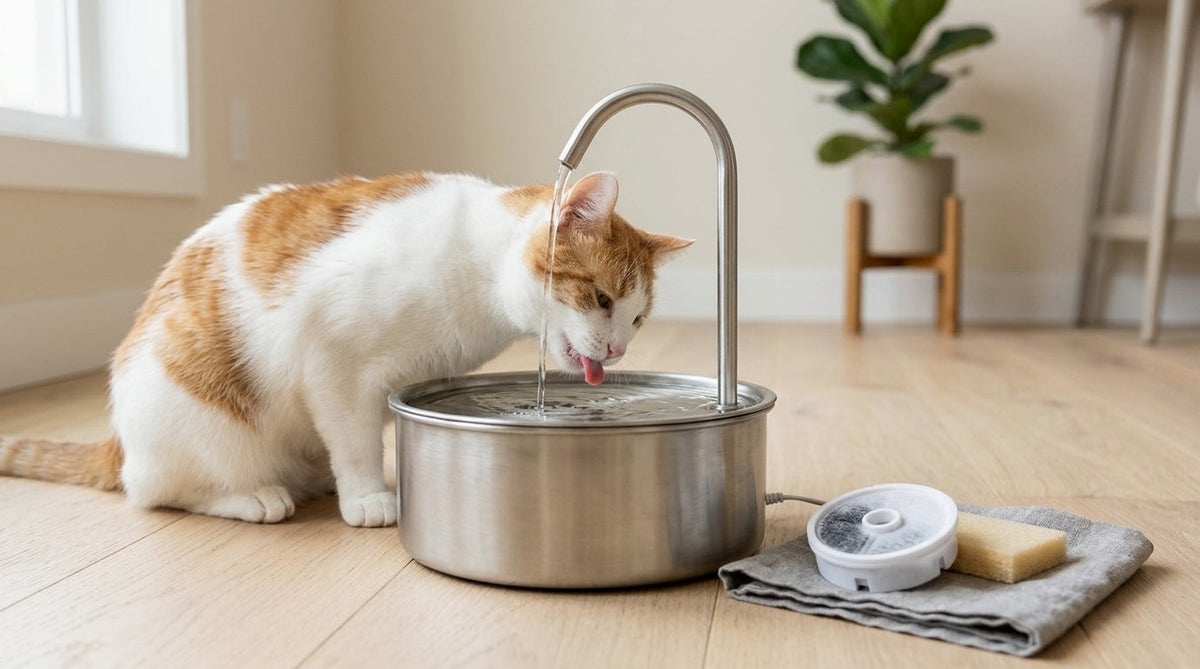
Ask most people what keeps a fountain working well and they will name the pump. The pump is important, but the filter does most of the heavy lifting. It keeps the water clean, stops buildup in the basin and shields the pump from the debris that slowly wears it out.
Nearly all of this happens without you noticing, which is exactly why it is so easy to forget. Here is what your filter really does and why replacing it on time matters more than you might think.
Catching Residue Early
Each day, little things find their way into your cat's water: fur, dust and the odd crumb of food. That is unavoidable. Tap water also contains dissolved minerals that gradually settle on surfaces. You may spot them as a light white film on the pump or along the edge of the bowl.
Your filter traps most of this before it can settle. It catches debris and lowers mineral levels so they do not pile up inside the fountain or block the pump. If the filter is worn out, everything keeps cycling through, and eventually the slimy layer so many owners dislike starts to appear. Stainless steel handles this much better than plastic does, yet it is still the filter that keeps things genuinely clean from one wash to the next.
Better-Tasting Water
Many cats are pickier about water than you might guess. If it smells odd or tastes slightly wrong to them, many will drink less or stop using the fountain entirely. This is one of the main reasons cats return to meowing at the sink or ignore their water altogether.
Activated carbon pulls out chlorine and similar substances that change how tap water smells and tastes. That is why the water stays inviting day after day and your cat returns for frequent small drinks rather than only drinking when very thirsty. Once the carbon is saturated, it stops absorbing those substances as well. The water may look fine to you, but your cat can already taste the difference.
Looking After the Pump
Few owners think about this side of it. When a filter is past its prime, water quality is not the only thing that suffers. The fountain has to work harder too. Debris the filter would normally catch reaches the pump instead, and minerals build up inside it. Flow slows down, noise increases and the pump wears out sooner than it should.
With a new filter in place, water flows freely, so the pump is under less stress, runs more quietly and helps your fountain last longer. It is a small step that heads off bigger problems later. If a pump does wear out, you can find spares in our filters & parts collection.
Don't Judge a Filter by Its Looks
Here is the trap many owners fall into. The filter does not look dirty and the water is still clear, so there seems to be no hurry to change it. But filters lose their effectiveness bit by bit, not in one go. The carbon fills up slowly over weeks and captures a little less every day. Once a difference is visible, the filter has already been underperforming for some time.
Picture a sponge that is already soaked. It may be resting in water, yet it has no room to absorb more, so impurities flow straight past it. Replacing filters on a set schedule keeps them working properly, even when one seems good for a few more days.
In Short
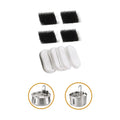
A good filter means cleaner water, better taste and a pump that lasts. Swapping it on schedule is a very easy habit that keeps the fountain running smoothly and encourages steady drinking. The job takes seconds, and your cat and fountain are both better for it. Keep a supply of replacement filters on hand so you never have to stretch one too long.