







July 01, 2026
7 Warning Signs of Taurine Deficiency in Cats and What to Do Next
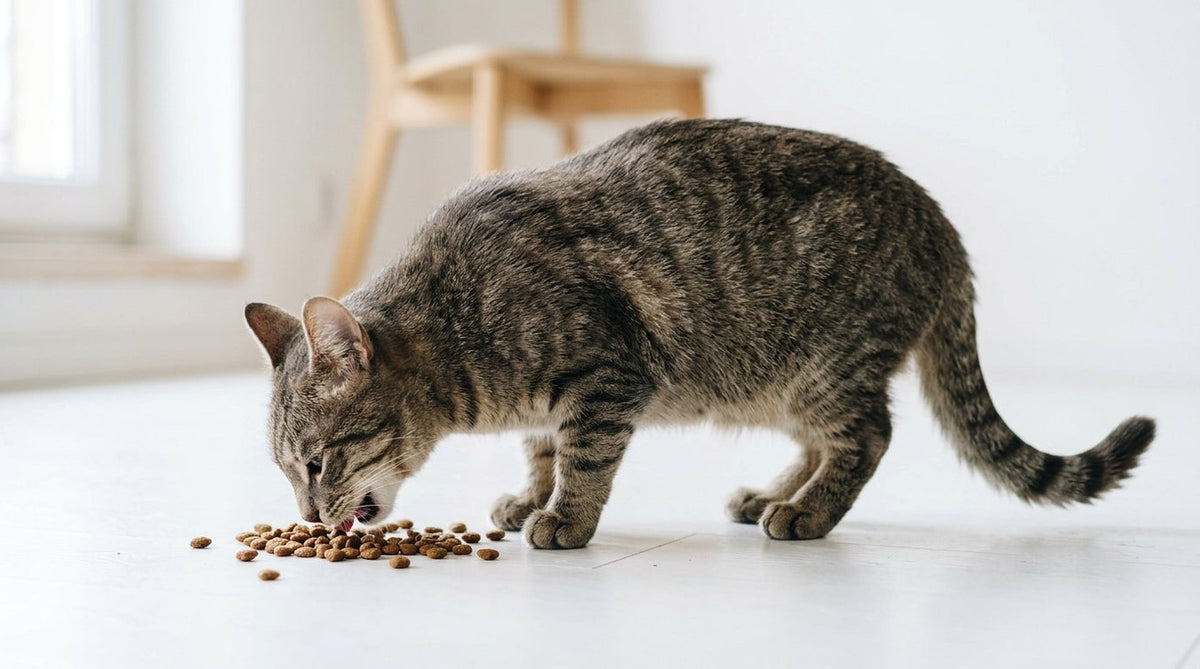
Something about your cat seems different. Maybe they are misjudging jumps, breathing a little fast, or simply acting quieter than usual without a clear reason.
Here is the honest picture: taurine deficiency almost never happens in cats eating a commercial complete diet, but when it does show up, it can be serious. You need to hold both of those ideas at the same time, and many articles only mention one.
Below you will find seven signs, starting with the subtle ones you might spot at home and ending with the ones that call for a vet visit today. After that come three simple checks and the feeding patterns most often behind the problem.
1. Eyesight Trouble and Hesitant Jumping
Changes in the retina are frequently the first thing to appear, although a vet usually finds them during an eye exam well before an owner sees anything. When this essential amino acid falls below what the light-sensing cells of the eye require, retinal degeneration creeps in slowly.
Pay attention to how your cat gets around when the lights are low. A pause before a jump they have made a thousand times, or a near miss on the arm of the couch at dusk, is easy to overlook until you think back on it.
2. Losing Weight or Eating Less
Taurine helps the body produce bile salts, so it does play a part in digestion. Still, a poor appetite and weight loss are not typical taurine signs. Hyperthyroidism, kidney disease and painful teeth explain far more cases. Think of weight loss as a reason to book a vet visit, whatever the cause.
The pounds tend to slip away over several weeks rather than a few days. Notice if a cat who once licked the bowl clean now walks away from half the meal.
Any weight loss you cannot explain deserves an exam, and a change that is visible or noticeable to the touch in a single month should not be put off.
3. Lethargy and Exercise Intolerance
An older cat napping more is expected. A young cat whose energy fades over the course of a week needs to be checked.
A heart muscle that lacks taurine cannot contract as strongly. At home, that looks like extra sleep and less excitement about chasing a toy or a laser dot.
That loss of stamina is often the first heart-related clue owners pick up. An echocardiogram typically detects the changes even earlier, which is why vets scan cats with a suspected heart issue instead of waiting to see what happens.
4. Rapid or Labored Breathing
Quick breathing in a cat that is resting is always a warning sign. More than 40 breaths a minute at rest means a same-day vet visit, and breathing with the mouth open is an emergency. Try not to assume it is the heart, because asthma, pain and anemia can all produce the same breathing rate.
5. Gait, Balance, and Coordination Changes
Changes in how a cat walks are occasionally linked with taurine deficiency, but the research in cats is limited. More important is what can look similar: sudden weakness or dragging of the back legs can point to an arterial thromboembolism, a complication of heart disease that is an emergency on the spot.
A cat who becomes unsteady or seems "drunk" overnight should be seen today. Sudden weakness in the hind legs should be seen right now. In both cases the exam comes first, and the conversation about diet happens once an emergency has been ruled out.
6. Breeding Issues and Kittens That Grow Slowly
A queen used for breeding who is low on taurine may have small litters or stillborn kittens. The kittens that do survive often grow slowly and stay behind.
Pregnant and nursing cats should eat an AAFCO diet that is complete and balanced, since their need for this essential amino acid goes up during pregnancy.
Male cats are less affected. But a queen with repeated poor litters tells you something about how every cat in the home is being fed.
7. Pale Gums and Slow Circulation
Checking gum color is the fastest clue you have. A bubblegum pink color is normal. Gums that look white, gray or muddy mean oxygen is not getting where it needs to go, and that requires an emergency vet.
Color should return in under two seconds after you press the gum. If it takes longer, or the gums look pale or gray, blood is not circulating well. That calls for an emergency trip, not a routine appointment later in the day.
Three Fast Checks to Do Before Calling Your Vet
These three checks each take less than a minute. They turn a vague worry into real information you can share with your vet.
1. Gum color and refill time
Gently lift your cat's lip. In a cat with good circulation, the gums should look pink.
Press on the gum for one second, release, and start counting. The color should return in under two seconds. Three seconds or more suggests a circulation problem rather than a hydration one.
2. The skin pinch test for hydration
Gently pinch the loose skin between the shoulder blades, raise it about half an inch, and let go.
In a well-hydrated cat, the skin falls back right away. If it stays tented for a second or more, your cat may be dehydrated. This one quick test gives you a hint about both circulation and kidney health.
3. Counting breaths while your cat rests
Wait until your cat is fully relaxed or asleep, watch the chest rise and fall, count for 30 seconds and multiply by two. Write the number down. A pattern over several days is far more useful to your vet than a single count.
Do Urinary and Kidney Chews Help With Taurine?
Plenty of owners whose cats have a history of urinary issues give a daily supplement along with meals. One point needs to be clear: urinary chews of this kind usually contain no taurine at all, so they do nothing for the signs listed above. Taurine needs are covered by a complete diet that meets AAFCO standards.
Common urinary ingredients such as cranberry concentrate and D-Mannose target the bladder, not anything in the list of warning signs.
Dosing for any supplement is normally based on body weight and is printed on the label. Talk to your vet before you start one, especially if your cat already eats a prescription diet.
For cats prone to urinary problems, a daily chew is something owners sometimes add on top of good food and plenty of water. Fresh, moving water can help encourage drinking, which is why many owners use a fountain such as our Wireless Stainless Steel Cat Fountain. Always check with your vet first, particularly for cats on a prescription urinary diet.
Feeding Habits That Put Cats at Risk
Store-bought cat foods that carry an AAFCO statement solved this issue decades ago. Today, nearly all cases come from the four feeding patterns described below.
In 1987, Paul Pion and colleagues showed the connection between low taurine and dilated cardiomyopathy, in research published in Science and later expanded in JAVMA. Manufacturers reformulated their recipes as a result, and the remaining risk now sits mostly in these four habits.
Feeding dog food or leftovers
Any cat that eats dog food for months builds up a shortfall that grows every week. The daily need is never met, and the body's reserves run out eventually.
Dog food is made for an animal that produces its own taurine. Cats cannot do that, so a recipe that fully meets a dog's needs still falls short for a cat.
Table scraps are an even bigger problem. Cooked meat on its own lacks many of the other nutrients a cat needs.
DIY or raw feeding with no expert input
A home-cooked meal plan can look perfectly healthy at first glance. Fresh meat naturally has taurine in it, so the ingredient is rarely the issue. The trouble is preparation. Taurine dissolves in water, so it escapes into cooking liquid and meat juices, and recipes created without a nutritionist are usually low in several nutrients, not just this one.
A raw diet designed without help from a board-certified veterinary nutritionist has the same risk of deficiency as a homemade one.
Meat-free diets for cats
There is no taurine in plant proteins, which means a meat-free cat food depends entirely on the added synthetic form to be safe. Cats absorb the added form well, which is why every commercial cat food includes it. The real risk lies in the rest of the recipe.
Cats are obligate carnivores and need animal protein. Vegan and vegetarian feeding does not match what a cat's body requires.
Boutique brands missing the AAFCO statement
Look on the bag for an AAFCO statement that names the life stage. If there is no statement, nobody has checked whether the food is nutritionally adequate.
Boutique and grain-free foods have been studied for a possible tie to dilated cardiomyopathy in dogs, and that question is still open. What is certain is simpler: a food without an AAFCO statement has never had its adequacy confirmed. Check for that line first, because it is the most dependable clue on the label.
Treatment and Realistic Recovery
How a cat is treated comes down to which organs have already been harmed. Some effects can be reversed and others cannot. Your vet will set realistic expectations based on the diagnosis and your cat's age.
When DCM can reverse
When DCM is found before congestive heart failure develops, the heart can recover. Vets often prescribe taurine supplementation, commonly around 250 mg twice daily, together with a complete diet and any needed heart medication. The dose is always your vet's decision, and taurine never takes the place of prescribed heart drugs.
The heart reshapes itself over three to six months, and blood work done at the beginning gives a baseline for tracking progress.
When retinal damage is permanent
The light-sensing cells of the eye do not grow back. Supplementation can stop further damage, but it cannot restore what is lost.
Taurine prevents more vision loss but cannot repair the retina once it has degenerated. In cats, that tissue does not regenerate.
Acting early protects the vision your cat still has.
Planning meals for recovery
Switch your cat to a balanced, complete store-bought diet, and discuss the switch with your veterinarian first.
If signs continue after the diet is corrected, ask about a taurine blood test. When DCM is suspected, imaging of the heart is the gold standard.
Recovery is slow, but it does happen, especially in younger cats.
Taurine FAQ
What is the daily taurine requirement for a cat?
Under AAFCO guidelines, dry cat food must provide at least 1,000 mg per kilogram, and wet food at least 2,000 mg per kilogram.
Healthy cats eating a balanced and complete store-bought diet reach this level without anything extra.
Pregnant queens and older cats with long-term illness sometimes need more, and your vet can tell you the right amount.
Is taurine made for people safe for cats?
The taurine powder sold for people is the same molecule used in cat products. The dose and the other ingredients, however, are different.
Human energy drinks contain substances that can poison cats, and supplements meant for people is not a safe place to shop for your pet.
If your vet suggests a supplement, choose one formulated specifically for cats.
Is the damage reversible?
The heart can bounce back when dilated cardiomyopathy is caught early. Given time and a corrected diet, a cat's heart is able to remodel.
Vision loss is usually permanent once the retina has degenerated, since that tissue does not rebuild in cats.
Breeding problems in queens often get better after the diet is fixed, though kittens already affected cannot regain that lost growth.
Can a cat safely eat a plant-based diet?
Cats are obligate carnivores, and the route they would need to make taurine from methionine or cysteine is too weak to rely on.
Plant proteins cannot meet the need alone, so a plant-based food depends entirely on synthetic taurine and other additives being correct. Some products meet AAFCO standards and some do not, and there is no room for mistakes. That makes it a topic for a veterinary nutritionist, not just a quick look at the label.
How long does it take for a deficiency to appear?
It builds up over months. The body uses taurine stored in the heart and liver before any signs appear.
Most cases go back to three to six months of an unsuitable diet. By that point, retinal damage or DCM may have already started.
The sooner the diet is corrected, the sooner recovery can begin.
Do the three home checks once a month. Chances are they will help you spot some other issue long before they ever reveal a taurine problem.