




June 01, 2026
Wireless Cat Fountain 2.0 vs PetLibro Dockstream 2 Smart
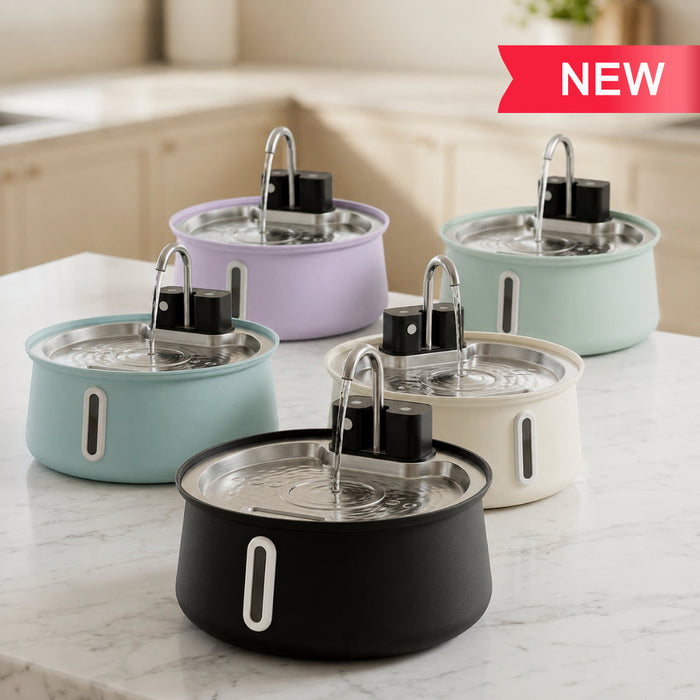
You have narrowed your search to two cordless-style fountains: our Wireless Cat Fountain 2.0 and the PetLibro Dockstream 2 Smart. Both are modern designs and both can be a good choice, but sooner or later you have to pick one.
This guide covers the five questions every cat parent should ask before choosing a fountain:
- What holds the water, and what the water actually touches
- How thorough the filtration is
- What smart features really do for you
- What comes in the box and what filters cost over time
- Which fountain suits which kind of household
Answer those five well and your fountain will keep working, and keep your cat drinking, for years of daily use. Get them wrong and there is a good chance your cat will eventually lose interest in it.
Here is our straightforward head-to-head. Specs for the PetLibro model are based on the brand's own product listing, so always confirm current details before you buy.
Quick Glance: Side-by-Side Comparison
| Spec | Wireless Cat Fountain 2.0 | PetLibro Dockstream 2 Smart |
|---|---|---|
| Material | 304 food-grade stainless steel in the water path, BPA-free | Stainless steel tray over a plastic basin (per brand listing) |
| Filtration | Activated carbon filtration | Four-stage filtration (per brand listing) |
| Power | Cordless | Plug-in |
| Pump noise | Under 25 dB | 23 dB (per brand listing) |
| Cleaning | Cleans in under 5 minutes, dishwasher-safe stainless parts | Stainless tray wipes clean; plastic basin needs regular scrubbing |
| Flow modes | Set directly on the fountain, no app required | Pet-sensing, plus continuous when plugged in |
| Smart features | None | Wi-Fi tracking and companion app |
What's Holding the Water: Why the Raw Materials Matter for Your Cat's Health
Your cat may drink from a fountain dozens of times every day. Each surface the water touches is a spot where biofilm can form, and plastic in that path can release chemicals into the water over time. A fountain that looks clean can slowly become an everyday health issue.
The effects tend to show up as chin acne, urinary problems, or a cat that drinks less once the bowl starts to look grimy. None of this appears in the first week. It builds up over the months and years a fountain sits in your kitchen.
304 Stainless From the Inside Out
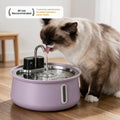
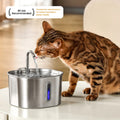
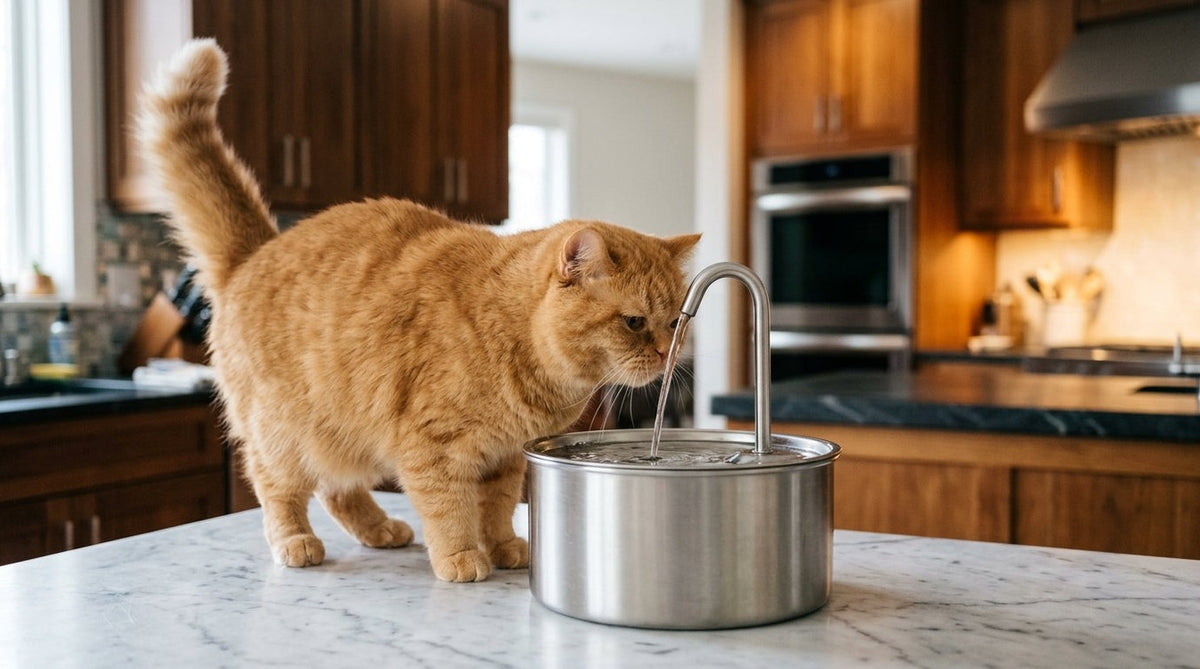
The Wireless Cat Fountain 2.0 is built around 304 food-grade stainless steel, the same type of steel used in commercial kitchens, and it is BPA-free.
Stainless steel does not scratch easily or leach into the water as it gets older, which means fewer rough seams where biofilm can take hold. Combined with activated carbon filtration, that keeps the water fresher between cleanings.
Stainless Steel Tray Over Plastic Reservoir
According to its listing, the PetLibro Dockstream 2 Smart combines a stainless steel tray on top with a plastic reservoir below, where most of the water is stored. The hidden basin ages differently from the tray you can see.
A steel tray is simple to wipe down. A plastic basin is exactly the kind of surface veterinary guides mention when they talk about long-term biofilm growth in water containers, so it deserves extra attention during cleaning.
Bacterial Load and Urinary Tract Health
Why does this matter for your cat? Respected sources such as the Cornell Feline Health Center and the AVMA point to clean water and good hydration as important for feline urinary health, and dirty water surfaces are a known contributor to chin acne.
Plastic picks up scratches with use, and each scratch gives biofilm somewhere to cling. A stainless steel water path avoids much of that problem.
Veterinary advice on feline urinary tract health, including guidance from International Cat Care, consistently emphasizes clean water and steady intake. If your cat has a history of urinary trouble, talk to your vet about hydration and whether a fountain makes sense for your household.
Multi-Stage Filtration vs Four-Stage Carbon
Each "stage" in a fountain filter is simply a separate layer that water flows through. A foam pre-filter traps hair, a carbon layer helps with chlorine taste and odor, and an ion-exchange layer can reduce some minerals and metals. The number of stages alone does not tell you much. What matters is what each layer actually removes.
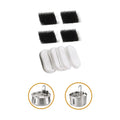
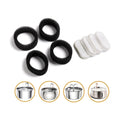
Both fountains cover the essentials: a pre-filter for hair and debris, followed by activated carbon for taste and smell. PetLibro describes its filter as four-stage. Our fountain relies on activated carbon filtration, and you can keep it running well with fresh replacement filters.
When you compare brands, look for published removal figures rather than stage counts, and replace filters on the schedule the manufacturer recommends.
Reservoir Size and Refills
Capacity decides how often you refill. A larger tank lasts longer between top-ups, while a smaller one needs attention more often, especially in a home with several cats.
Every refill is also a temptation to pour fresh water on top of old water instead of starting clean, which keeps stale water in the system longer. Cats cannot go long without water, so a fountain that runs low between refills is a real risk for the cat depending on it. Whichever model you choose, empty, rinse and refill rather than just topping up.
Flow Modes: User-Picked Settings vs Pet-Sensing
Cats naturally prefer moving water to still water, which is one reason fountains often encourage more drinking than a plain bowl. The way a fountain runs during the day affects how that plays out.
With the Wireless Cat Fountain 2.0, you choose the mode on the fountain itself, with no app involved. Common options on cordless fountains work like this:
- Continuous mode keeps water flowing all day. That steady movement helps win over shy drinkers during the first week or two and works well when several cats share one fountain.
- Timed mode switches the pump on and off in cycles, saving battery while making sure the water never sits still for long.
- Sensor mode starts the flow when your cat comes close. It is the most battery-friendly choice and helps stretch time between charges.
The PetLibro Dockstream 2 Smart offers a pet-sensing mode. Motion sensors on any brand can be less reliable with very small cats or kittens, so watch your cat's first few visits to make sure it triggers.
When it comes to noise, the two are close: our pump runs under 25 dB and PetLibro lists 23 dB. Both are quiet enough that you will not hear them across a room.
Smart Features and App-Connected Hydration Tracking
Smart features are PetLibro's main selling point. The Dockstream 2 Smart connects to Wi-Fi and works with the PetLibro app.
Based on the brand's description, the app records daily drinking, alerts you to changes in patterns, and reminds you when it is time to replace the filter. There is also an RFID version aimed at multi-cat homes that tracks each cat through a collar tag.
That kind of tracking can be useful. A drop in water intake is one of the earliest signs of kidney disease or urinary problems, while a sudden increase can be a warning sign of diabetes. If you notice either change, with or without an app, contact your vet.
If you prefer a simpler setup with nothing to pair or update, a fountain without an app may suit you better. You can still track intake by noting how quickly the water level drops.
What You Pay Up Front and the Cost Over Time
| What to check | Why it matters |
|---|---|
| Sticker price | Compare the current price of each model on the official store pages. |
| What comes in the box | Some fountains include extra filters or accessories, others only a starter filter. |
| Filter price and lifespan | A cheaper filter that you change more often can cost more in the long run. |
| Spare parts | Make sure pumps and small parts are sold separately in case something wears out. |
| Accessories | A splash mat and a cleaning brush make daily care easier. |
The price on the tag is only part of the story. Look at what each box includes and what you will spend to keep the fountain running.
Useful extras for any fountain include:
- An Anti-Splash Silicone Fountain Mat to protect your floor
- A Fountain Cleaning Brush Kit for spouts and tight corners
- A supply of replacement filters and access to filters & parts
Filter Cost Over Six Months
To compare running costs fairly, work out how many filters each fountain needs over six months at the replacement schedule the manufacturer recommends, then multiply by the price of a filter pack.
A filter designed mainly for taste and odor is usually cheaper per month. A more thorough filter can cost more but may do more for water quality.
If your tap water is already clean, a basic carbon filter may be all you need. If you are concerned about chlorine or other substances in your water, paying a little more for better filtration may be worth it.
Which Fountain Fits Which Household
Instead of relying on reviews alone, think about how you live with your cats:
- Choose an all-stainless, app-free fountain if easy cleaning, a durable food-grade water path and a no-fuss setup are your priorities.
- Choose an app-connected fountain if detailed drinking data and phone alerts matter more to you than material, and you are happy to clean a plastic basin carefully.
- For multi-cat homes, prioritize capacity, steady flow and simple cleaning, since the fountain will get heavy use.
Whatever you choose, clean the fountain regularly, change filters on time and keep an eye on how much your cat drinks. If anything changes suddenly, check in with your veterinarian.