

July 16, 2026
PetLibro One RFID vs SureFeed Connect vs a Scheduled Smart Feeder
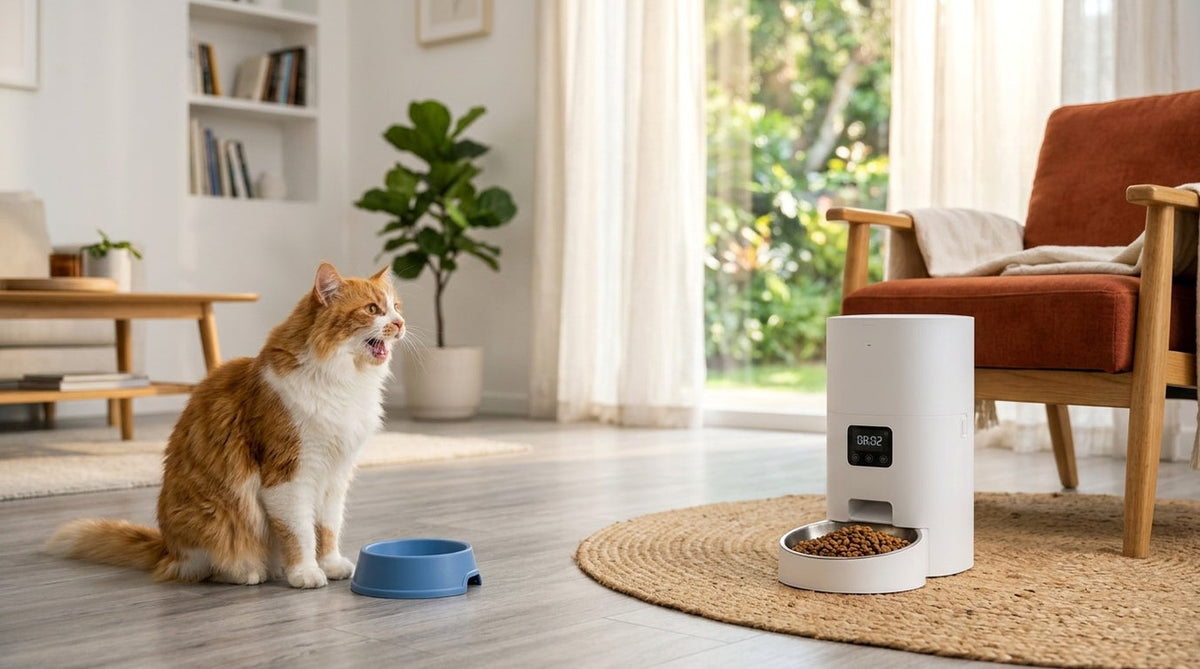
For years, dinnertime in my house has been a heist. One cat finishes her portion in half a minute, then strolls to her sister's dish as if second helpings were her right.
If that sounds familiar, you have probably wondered how the PetLibro and SureFeed selective feeders stack up, and which kind of feeder really ends the stealing.
Let's start with the bottom line instead of hiding it.
The right choice depends on your actual problem. When you need to physically stop one cat from eating another cat's food, a selective feeder such as the SureFeed Microchip Pet Feeder Connect or the PetLibro One RFID is designed for that job.
When your goal is dependable, measured meals on a timetable, a third type, a scheduled smart feeder like our Automatic Smart Cat Feeder, is made for exactly that and is usually the most affordable route.
Specifications and prices for the two selective feeders below come from the manufacturers' published listings as of June 2026 and may have changed since, so double-check before you buy.
The Case for Measured Portions
Before comparing gadgets, it is worth understanding why controlling portions matters at all.
Free-feeding, where a bowl stays full all day, is a common way for cats to put on weight without anyone noticing. A large survey found 61% of cats were overweight or obese, and most of their owners had no idea.
For a cat on a prescription diet, accurate portions are everything, since the food only helps if the intended cat eats the intended amount. A microchip feeder such as SureFeed restricts the bowl to one cat so others can't help themselves, while a programmable dispenser takes care of precise amounts. That difference is the core of this comparison.
Age shifts the numbers as well. A growing kitten and an elderly cat have very different needs, so the amount that keeps one lean could leave the other underfed. A feeder that lets you set exact portions is supporting your cat's health, not just saving you a morning scoop.
The Three Feeders Compared
Here is a quick overview of the three approaches before we go into detail.
| PetLibro One RFID | SureFeed Connect | Scheduled smart feeder | |
|---|---|---|---|
| How it controls access | Tag worn on the collar (RFID) | Implanted microchip or a collar tag | Timed, measured portions |
| Suitable food | Kibble only | Both wet and dry | Kibble only |
| Capacity | 3L hopper, about 13 cups | 400ml bowl | Hopper (see product page) |
| Scheduling | As many as 10 meals daily | No timer; it is a bowl | Programmable meal schedule |
| App | PetLibro app over Wi-Fi | Sure Petcare app, Hub required | Not required |
| Power | Plug-in with backup batteries | Four C batteries, roughly 6 months | Depends on model |
| Listed price (June 2026) | $149.99 | About $227.90, Hub extra | Usually the lowest of the three |
My quick take on the two selective models: SureFeed makes sense when you need strict separation by microchip, or when you feed wet food.
PetLibro fits a home with several cats that wear collars and eat kibble.
For the larger group of owners who simply want reliable, measured meals without complications, a scheduled smart feeder covers the most needs at the friendliest price and with the least day-to-day hassle.
Stopping Food Theft: Three Different Approaches
This is the central question, and each feeder tackles it its own way.
SureFeed reads the microchip under your cat's skin (or a tag on its collar) and only lifts its lid for the registered cat. That tight separation is why it shines when one cat needs a prescription diet and the others keep sneaking bites.
PetLibro relies on an RFID tag on the collar rather than a chip. The tag is tiny and light and attaches to a collar your cat likely already has, so most cats hardly register it.
There is one quirk worth mentioning, though. PetLibro opens for the correct tag, but a persistent cat can sometimes push its head in before the lid closes. Still, one owner who has used two of them for more than a year reported on a PetLibro user forum that the app works well, meals arrive on time in the right amounts, the stealing stopped, and the cats no longer vomit from gulping food to protect it.
A scheduled smart feeder approaches the problem from the opposite side. Instead of guarding a bowl, it doles food out in measured amounts through the day, so there is never a heap of kibble waiting to be stolen. In many homes that is all the separation required, and if you are managing a urinary condition through diet, regular mealtimes make sticking to the plan much easier.
Wet Food, Dry Food, or Both
The type of food you use may decide this alone. Among the three, only SureFeed copes with wet food, using a sealed 400ml bowl and a lid that closes tightly to keep it fresh. One owner in an online cat advice group said wet food has sat in theirs for 12 hours without trouble when their cats left some behind.
If your cat eats mostly wet food, that counts strongly for SureFeed.
The PetLibro One RFID and a hopper-style scheduled feeder are built for kibble. They release food from a hopper, so pate won't work, and kibble size matters more than a fresh-food seal. If you feed dry anyway, you lose nothing and gain much more storage than a bowl can hold.
If you feed wet food in the morning and kibble overnight, that split actually suits a dry feeder well. You serve the wet meal by hand, and the feeder handles the overnight kibble so no one pounces on you at 5am for breakfast.
Storage and Portion Settings
This is where a hopper feeder really earns its place. A sizable hopper and several small portions per meal let you spread food across the day.
Instead of one large serving, your cat gets a series of smaller meals. That kind of schedule is ideal for weight control or for a cat that does best eating small amounts often.
PetLibro also schedules dry meals, and owners appreciate the precise control when feeding several cats.
SureFeed is the exception, because it is a single bowl, not a dispenser, so it won't divide the day's food for you. No timed microchip feeder also dispenses portions, which catches many shoppers off guard.
If hands-off scheduling is your priority, a hopper feeder suits you better than a bowl you have to refill. A manual feed option also lets you add a quick extra serving between meals.
Smartphone Apps and Connected Extras
PetLibro goes furthest with connected features. Its app links over Wi-Fi and tracks what each cat eats, making it a true Wi-Fi feeder.
SureFeed offers the Sure Petcare app and built-in scales as well, although the feeder works perfectly well without the Hub. You only need the Hub, sold on its own, for app logs and weight tracking. As one owner explained online, the basic features all work without it, and only extras such as setting a weight target for the scale depend on the Hub and app.
A scheduled feeder that runs without an app takes the opposite approach, and that is easy to underrate. There is no app to install, no extra base unit, and no training mode to figure out.
You program it directly on the device. If you would rather not add yet another app to your phone, simplicity is a real advantage rather than a missing feature.
Reliability plays into this too. An app plus a base station means two more things that can lose your Wi-Fi at the worst time, usually when you are away. A feeder that runs on its own internal clock has nothing to disconnect from, and for many owners that reassurance matters more than any feeding chart.
Dependability From Day to Day
In everyday life, this is what counts most. A feeder is only worth having if it works every single day. Of the two selective models, SureFeed has the stronger long-term track record. One owner wrote in an online cat forum that their SureFeed units lasted eight years and were worth every penny, and that they only upgraded to newer versions for intake tracking, not because the old ones failed.
PetLibro also gets mostly positive feedback. Occasional complaints involve a jammed rotor or the feeder briefly losing its connection, both usually simple to fix. One owner, about a year in, said they were very satisfied apart from the rotor jamming now and then, which they solved by spreading food into smaller, more frequent meals.
A scheduled feeder avoids lid-timing issues altogether, because it isn't guarding a bowl.
Look for an enclosed dispenser that keeps kibble from jamming or spilling, a removable bowl for easy washing, and backup power so meals keep coming during a brief outage. Fewer moving parts is a quiet form of reliability.
Whichever feeder you choose, wash the bowl every day. Kibble dust and saliva build up faster than you would expect, and a clean bowl is the cheapest way to keep a picky cat eating well.
What They Cost to Buy and Run
| Feeder | Listed price (June 2026) | Extras |
|---|---|---|
| PetLibro One RFID | $149.99 | None required |
| SureFeed Connect | $227.90 | Hub sold separately |
| Scheduled smart feeder | Typically the lowest | None required |
On price, the ranking is fairly clear. According to the manufacturers' listings, the SureFeed Connect costs the most at about $228 before you add the Hub, and the PetLibro One RFID falls in between at $149.99. A scheduled feeder without selective access, such as our Automatic Smart Cat Feeder, generally comes in below both; check the product page for the current price.
Running costs matter as much as the upfront price. SureFeed uses C batteries instead of a power cord, which annoys some owners; one complained online about having no cable option and needing four C batteries that last only about six months.
PetLibro plugs into the wall, so there are no batteries to keep buying, though it costs noticeably more upfront than a basic scheduled feeder.
A scheduled feeder keeps things economical to own as well as to buy: no separate Hub and no ongoing fees.
Keep the bigger picture in mind too. Compared with one emergency vet bill for an overweight cat, the cost of any of these feeders looks fairly modest, and the right one repays you with calmer, healthier mealtimes.
Choosing the Right One for Your Home
So which approach wins? It depends on your cat, and here is how I would decide.
- Go with a scheduled smart feeder if you mostly want reliable timed portions, simple everyday use, and the best value.
- Go with the SureFeed Connect if you need genuine microchip separation, feed wet food, or have a cat on a strict therapeutic diet that must not be raided.
- Go with the PetLibro One RFID if your cats are comfortable in collars, you feed kibble, and you want app-tracked selective feeding for several cats.
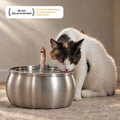
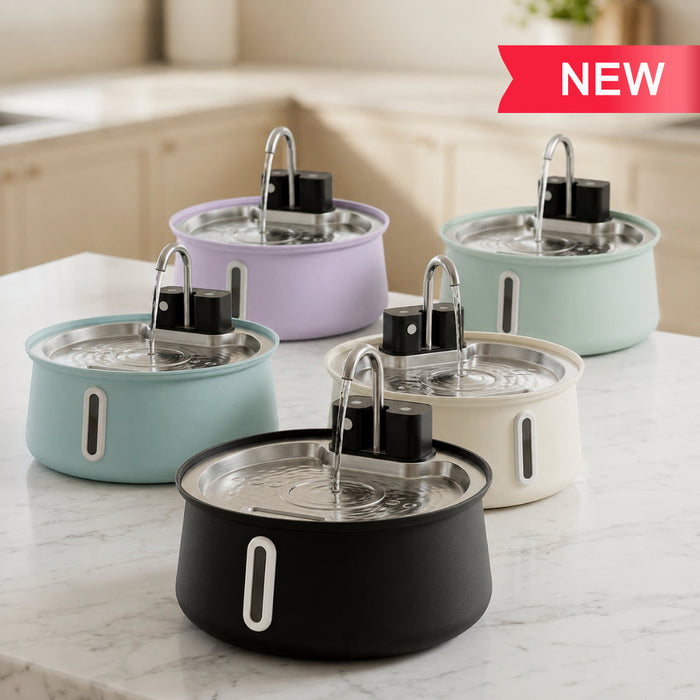
Getting ready for a new kitten or planning a trip? An automatic feeder helps keep mealtimes consistent while your routine changes or while you are away, and it pairs well with a 2.2L Stainless Steel Cat Fountain so water stays fresh too.
For most households, a scheduled feeder is what I would recommend to a friend: dependable portions and no app headaches. See our Automatic Smart Cat Feeder here.
Feeder FAQs
Can SureFeed be used on a cat without a microchip?
Yes. The SureFeed Connect recognizes implanted microchips, but it also includes a collar tag you can register instead, so your cat doesn't need to be chipped.
Does the PetLibro One RFID rely on a collar tag rather than a chip?
Yes, that is its whole design. PetLibro reads a lightweight RFID tag on the collar instead of an implanted microchip, which works well for cats that already wear a collar happily.
Which of these feeders handles wet food?
Only the SureFeed Connect is built for wet food. The PetLibro One RFID and hopper-style scheduled feeders dispense kibble only.
What's the best option for several cats?
If one cat raids another's prescription food, a selective feeder like SureFeed is the safest bet. If you simply need everyone fed the right amount on time, a scheduled feeder manages a multi-cat routine simply and for less money.
Do I need an app for a scheduled feeder?
Not necessarily. Many scheduled feeders let you set times and portions directly on the device, with no app or extra hardware to configure.
What happens during a power outage?
Feeders with battery backup keep dispensing on schedule if the power drops, so look for that feature, along with an enclosed dispenser that prevents jams.
Can a feeder help with weight management?
Yes. Splitting the daily amount into several smaller portions helps grazers and cats that need to lose weight. Always run any weight-loss plan by your vet first.