







July 12, 2026
Hairball Remedies for Cats: What Works and When to Worry
A hairball appears on the carpet, and you are left asking whether this is ordinary cat behavior or a hint of something more serious. Usually it is the former, and the right hairball remedy is all you need.
Below we go through what genuinely helps with hairballs, in the order we would try each step. We also mark the point where coughing up fur is no longer normal and becomes a reason to see the vet.
This guide was reviewed in July 2026, but a hairball accompanied by other symptoms should always go to your vet.
Quick summary
- Seeing a hairball every week or two is normal. Far more frequent hairballs, or repeated heaving with nothing produced, means calling the vet.
- Regular brushing works best, since it takes loose hair off before your cat can swallow it.
- Fiber, oils and lubricating gels all help swallowed fur travel through the digestive tract rather than coming back up.
- Hydration is the remedy most owners overlook, and it is one of the simplest to improve.
Normal Hairballs vs. Warning Signs
Before reaching for any remedy, separate a routine hairball from a red flag. One every week or two is standard upkeep for a cat that grooms itself. Several in one week, or heaving that produces nothing, deserves a call to the vet instead of a home solution.
Most swallowed fur moves straight through. Occasionally a clump forms in the stomach and gets brought back up, and that is what ends up on your carpet.
What Counts as a Normal Hairball Frequency?
According to Cornell's Feline Health Center, a hairball every week or two is not a cause for concern, and fewer is even better.
Longhaired cats produce them more frequently than shorthaired cats, and seasonal shedding raises the count for all cats. That much is to be expected.
The pattern is what counts. If a cat that used to have an occasional hairball suddenly has one every few days, take a closer look.
Warning Signs That Go Beyond Hairballs
Fur that normally passes can sometimes get stuck. Cornell states plainly that a mass of hair trapped in the intestine can be fatal if left untreated.
Contact your vet that same day if you see any of the following:
- Heaving over and over without bringing anything up
- Not eating, or seeming listless, for longer than a day
- Constipation, or pushing in the litter box with little result
- A bloated or sore abdomen
- Attempting to vomit two or three times within one day
None of these should be watched and waited on. An intestinal obstruction is a true emergency, and no home remedy can fix it.
A single hairball is routine. A hairball combined with a poor appetite, weight loss or straining is another matter entirely, and small signs like these can add up quickly. Look at the overall pattern, not one isolated event.
Hairball Remedies Worth Trying
Now for the solutions. We have arranged them in the order you would realistically try them, beginning with the one that gives the biggest benefit for the least effort.
Cat owners in online forums have tested each of these, and we have included what worked for them in practice. Consider this your hairball toolkit, ranked roughly by impact.
1. Brushing: Catch the Fur Before It Goes Down
The most effective hairball remedy keeps hair from ever reaching the stomach.
The tiny backward-pointing spines on a cat's tongue are known as papillae, and they act like a comb that only moves toward the throat. That means most of the fur a cat grooms out gets swallowed instead of falling away. Brushing several times a week leaves much less of it to swallow.
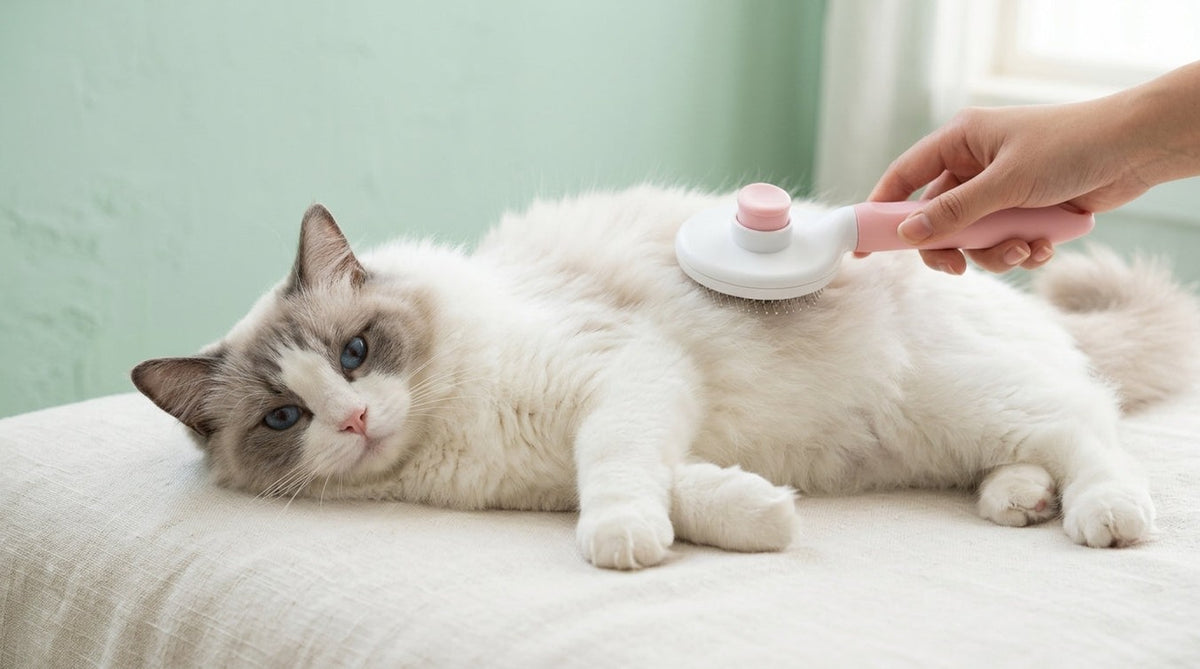
Spending a few minutes with a slicker brush or deshedding tool several times weekly makes a noticeable difference, and more often during heavy shedding.
The payoff can be dramatic. One owner on a cat-care forum described ending a hairball problem their Balinese had had for more than ten years, in part by switching to a boar-bristle brush; the cat that once acted as if brushing hurt now leans in and purrs.
If your cat hates being brushed, you are in good company, and there is no need to force it. Another owner won over two adopted adult cats using treats and by matching the tool to each cat: a slicker brush for one and a rubber grooming tool for the shorter-haired one.
Brushing just before mealtime also helps, because your cat learns that something good comes next. Starting the habit in kittenhood is much easier, so make gentle grooming part of a new kitten's routine from the beginning.
2. Fiber and Food: Pumpkin, Fish Oil and Hairball Formulas
Brushing deals with fur before it is swallowed, and fiber helps whatever does get swallowed keep moving. Hairball-control diets use the same idea, adding extra fiber to carry hair through the digestive system before it can clump into a trichobezoar, the veterinary term for a hairball.
The do-it-yourself version is a spoonful of plain canned pumpkin stirred into wet food, and online cat owners rave about it. One owner who gives it to several cats every morning said they had spotted only two small hairballs in six months from their long- and medium-haired brothers.
Begin with a small amount, around a quarter teaspoon, and increase gradually so you don't upset your cat's stomach. A little fish oil is worth adding as well: its omega fatty acids support a shinier coat and reduce shedding, which means less loose fur to swallow in the first place.
3. Hairball Gels: How They Work and When to Use Them
Next come the gels, the malt-flavored or petroleum-based pastes sold in tubes at pet stores. These are oil-based lubricants that coat swallowed hair so it slips through more smoothly. VCA advises using them with your vet's guidance, particularly if hairballs are frequent.
If your cat enjoys the flavor, a gel can be an easy win. One owner who combines a hairball gel with pumpkin and regular brushing reported that their cat has not had a single hairball since starting it.
Keep in mind that gels treat the symptom, not the cause. They help hair pass on a given day, but they don't reduce how much fur your cat swallows. That is why we see them as one part of the toolkit rather than the complete solution.
The Missing Piece: Hydration
This is the remedy most articles leave at the very end, if they mention it at all: water.
Swallowed fur must travel the full length of the intestines to exit in the litter box instead of reappearing on the floor. Fiber helps push it along, and moisture works together with fiber, so a well-hydrated cat moves hair through more easily. Dehydration makes that journey tougher, which is why water is fiber's silent partner.
The catch is that cats naturally drink very little, which is exactly why hydration belongs in a hairball plan. Improve your cat's drinking and you address part of the problem at its source.
Cats prefer fresh, flowing water. That is why a still bowl tucked in a corner often gets ignored, leaving water intake too low to help swallowed fur along.
An Easy Way to Boost Your Cat's Water Intake
A cat that drinks more keeps its digestion moving, making it more likely that swallowed fur ends up in the litter box instead of on your carpet. A faucet-style stream of moving water is often what tempts a picky drinker. See the 4L Stainless Steel Cat Fountain here.
A 4-liter reservoir means water is always available and stays fresh instead of sitting half-finished since morning. That constant, all-day supply does more to keep fur moving than one big drink at a bowl. Activated carbon filtration helps keep the water clean, and the stainless steel parts are dishwasher-safe.
A fountain won't clear an obstruction, and it isn't a standalone cure. Combined with brushing and fiber, though, better hydration is among the easiest ways to reduce how often hairballs show up.
Fewer hairballs on the stairs and a cat that drinks without coaxing: that is the trade. Check out the Wireless Cat Fountain 2.0 or the 4L Stainless Steel Cat Fountain.
If your cat already avoids its water bowl, the bowl's material, location and stillness are often the reasons, and they are all easy to change.
If Hairballs Won't Go Away
Suppose you have brushed, added pumpkin and fixed the water situation, and your cat still produces hairballs more often than the every-two-weeks guideline. At that stage the hairball itself isn't the real issue; it is a symptom.
Two things cause excess fur buildup. The first is over-grooming caused by fleas, allergies or itchy skin, where a cat licks well beyond normal maintenance. The second is sheer volume of coat, since a longhaired cat or a heavy seasonal shed puts more fur on that busy tongue.
Vets know this as self-induced hair loss, a frequent sign of allergic skin disease in cats, and pumpkin can't solve an itch. Another possible cause is an underlying digestive condition such as inflammatory bowel disease or a food sensitivity, which makes even a normal amount of hair harder to pass.
The bottom line: if several weeks of consistent home remedies don't reduce the frequency, your next move is a talk with your vet, not a stronger gel.
A prevention plan that uses all three tools, regular brushing, a bit of daily fiber and steady hydration, is your strongest protection against repeat hairballs. It also travels easily, which helps when trips or schedule changes disrupt your cat's routine.
Common Hairball Questions
What can I do to help a hairball pass?
Most hairballs resolve on their own. To give one a nudge, mix a little fiber such as canned pumpkin into a meal, make sure your cat is drinking enough, and, with your vet's guidance, try a lubricating gel if your cat will take it.
If your cat keeps heaving without producing anything, or just doesn't seem like itself, call your vet instead of waiting.
Do hairballs ever come out in the litter box?
Yes, and that is the best-case scenario. Most swallowed fur leaves in the stool instead of being vomited up. Fiber and good hydration are exactly what shift the balance toward the litter box and away from your floor.
Is there a way to dissolve a hairball?
Not really. Hairball gels lubricate fur so it moves more easily, but they don't break it down. A hairball that is truly stuck won't simply melt, which is why ongoing retching calls for a vet, not more gel.
When do cats start getting hairballs?
Kittens seldom have them, since they haven't been grooming for long and have short coats. Hairballs typically appear in adult and senior cats and become more frequent as cats age and groom more thoroughly, with longhaired breeds most affected.
My cat coughs but produces nothing. Could it be a hairball?
Sometimes a cat trying to bring up a hairball will hack several times before anything comes out. However, a dry, ongoing cough with no hairball can also indicate feline asthma, which is an entirely different issue. If the coughing continues or your cat seems sick, have it examined rather than assuming it is fur.
An occasional hairball comes with sharing your life with a cat. With regular brushing, a little pumpkin and water your cat actually wants to drink, you can keep them rare. Track how often they happen, take the warning signs seriously, and you will know when a home remedy is enough and when it is time to call your vet.