





July 21, 2026
Most Cats Don't Need a Probiotic. Here's How to Tell
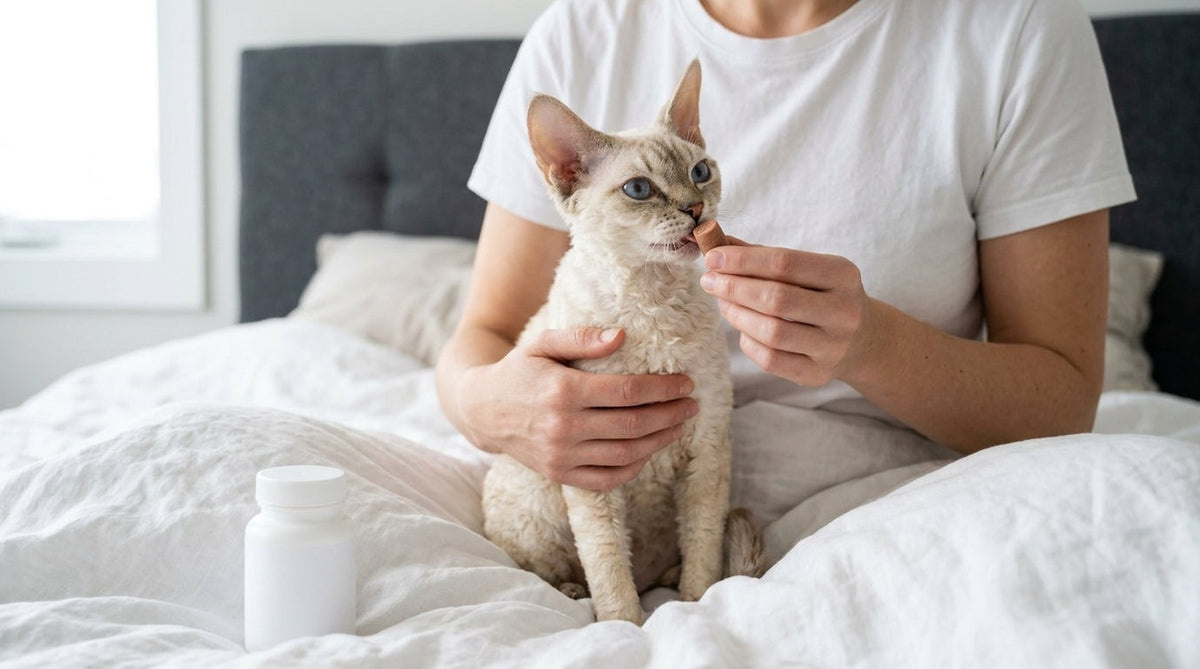
Here is the straightforward truth about probiotics for cats that a lot of articles leave out: some cats really do benefit, and many healthy cats have no need for them.
In the next few minutes we will work out which group your cat falls into, pair the right probiotic with the specific issue you are seeing, cover dosing, and point out when a supplement is no longer the right answer.
This is general information, not a diagnosis. Your own vet should always make the final call for your cat.
When a Probiotic Might Genuinely Help
If your cat produces well-formed stools, eats eagerly and has a glossy coat, its gut is most likely in good shape already. Adding a probiotic then mostly lightens your wallet.
The supplement makes sense when digestion has clearly gone off track. Consider one in situations like these:
- Soft, loose or unusually smelly stool that keeps returning.
- Diarrhea with no link to a recent food change.
- A recently finished course of antibiotics, which kill helpful bacteria along with harmful ones.
- Lots of gas, or a stomach that upsets easily.
- Inflammatory bowel disease (IBD) confirmed by your vet.
- Upheaval such as moving house or bringing home another animal.
- A lackluster coat or regular hairballs, though the proof that probiotics help with these is thin.
The antibiotic scenario comes up all the time. In one online cat forum, an owner explained that her cat's stool turned very soft on doxycycline, and her vet advised stopping the medication and starting a probiotic.
It is a familiar pattern because these drugs genuinely upset the gut. A feline study of doxycycline and amoxicillin-clavulanate showed that both drugs disturb the balance of gut bacteria, and that disruption is precisely when a probiotic can support recovery. Even so, don't halt an antibiotic your vet prescribed without checking first, since completing it is often what beats the infection, and space the probiotic a few hours away from each antibiotic dose.
Stress is the other trigger owners tend to underestimate. If your cat's stomach goes haywire whenever routines are disrupted, it pays to plan travel and other big changes carefully so digestion stays on track.
Realistic Expectations: Benefits and Limits
Probiotics are supplements made of living, helpful bacteria for the digestive tract. They are often combined with a prebiotic, which feeds those bacteria (frequently a fiber called FOS, which is short for fructooligosaccharides).
Used together, the two restock your cat's intestinal flora and push the microbiome back toward equilibrium. In everyday terms, that equilibrium is what gut health really means.
When the balance breaks down into what vets call dysbiosis, helpful and harmful bacteria get out of proportion, and the entire digestive tract is affected.
Bringing it back is where the benefits appear. Published studies on probiotic use in cats associate them with better-formed stools, smoother digestion, and easing of constipation as well as diarrhea.
Put simply, a good probiotic supports digestion after antibiotics. It can also settle a sensitive stomach and may help support immunity.
Where probiotics stop helping
Think of a probiotic as support, never as a cure. It can't clear an obstruction, eliminate parasites, or undo a hormone disorder.
It is also different from digestive enzymes, which help break down food instead of restocking the gut with good bacteria.
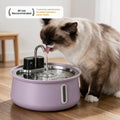
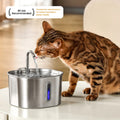
One experienced cat owner online summed it up sensibly: a probiotic is genuinely helpful, and it can also tempt a cat who has lost interest in food. Keep in mind that hydration supports digestion too, so a cat who isn't drinking enough has a separate issue to address, and a 2.2L Stainless Steel Cat Fountain can make water more appealing.
Pick the Strain That Fits the Symptom
Most product roundups skip this step, yet it is the one that matters most.
Cat probiotics do not all work alike. Different issues call for different strains, so compare the problem you are seeing with what the label lists.
| Problem you're seeing | Ingredient to check for | Reason it matches |
|---|---|---|
| Persistent loose stools or diarrhea | Enterococcus faecium, ideally strain SF68 | Tested in cats, with fewer diarrhea episodes |
| Bouncing back from antibiotics | Several strains combined with FOS prebiotic | Replaces bacteria the medication wiped out |
| Gets sick often or has low immunity | Beta glucan plus Bacillus subtilis, Bifidobacterium or Lactobacillus | Strains linked to immune regulation |
| Constipation | Probiotic plus prebiotic fiber | Helps keep things moving regularly |
| IBD or an easily upset stomach | Multi-strain product your vet selects | IBD calls for professional supervision |
The evidence for diarrhea is the strongest available. In a double-blind trial at an animal shelter, cats given Enterococcus faecium strain SF68 had fewer bouts of diarrhea that lasted two or more days.
For recovery after antibiotics, a 2026 trial reported that SF68 helped the gut normalize faster once cats had finished amoxicillin-clavulanate.
On the immune side, strains that originate from cats show the most promise, including a study of shelter kittens in foster care where a feline-specific probiotic aided preventive health.
The number of strains matters for the same reason. As one cat owner put it bluntly, a probiotic that is mostly a tasty topper with only a few strains is closer to a treat than a treatment.
To be fair, none of this is fully settled for cats yet, so think of these as the best-supported choices rather than guarantees.
CFU Counts, People Probiotics and Yogurt
Every label lists CFU, which stands for colony-forming units, essentially the number of live bacteria in each dose.
A higher number is not automatically better, but enough live bacteria need to survive digestion, which is why quality probiotics use a coating that resists stomach acid instead of breaking down too early.
And no, your cat does not need your probiotics. Human probiotics and a spoonful of yogurt contain strains designed for human digestion, and many cats handle dairy poorly anyway.
Choose a probiotic made for cats, in whatever form your cat will accept: powder, paste or chew.
A Single Daily Chew Can Cover Several Needs
After all that strain matching, here is the encouraging part: you do not need to become an amateur chemist. Many cat probiotics come as a single daily chew designed to cover several of the rows above at once.
When comparing options, palatability matters as much as the formula, because a chew your cat refuses does nothing.
Look for a clear CFU count, a strain such as Bacillus subtilis in an acid-resistant coating, and beta glucan if immune support is your goal. That combination lines up with the weak-immunity row.
Prebiotic FOS in the formula feeds the beneficial bacteria, which helps a gut rebuild after antibiotics and keeps a sluggish digestive system moving. That covers two more rows.
One caveat: if diarrhea is your cat's main problem, that is where SF68 has the evidence, and many general chews do not include it. In that case, look specifically for Enterococcus faecium SF68.
For everyday gut maintenance and a bit of immune support, though, a well-formulated multi-strain chew is a reasonable choice to discuss with your vet.
Dosing and Getting Your Cat to Take It
Getting the amount right is where many good plans fall apart. No universal number exists, because it hinges on how concentrated the product is and how big your cat is, and trustworthy brands adjust the daily amount according to body weight.
Here is an example of how a weight-based chew label can look. Always follow the label on the product you actually buy.
| Body weight | Chews per day (sample label) |
|---|---|
| Less than 5 lb | 5 |
| From 5 to 10 lb | 10 |
| From 10 to 15 lb | 15 |
| More than 15 lb | 20 |
Offer it a single time each day, preferably alongside a meal, and be consistent. Probiotics are not a quick fix. They work by gradually recolonizing the gut, so the daily routine is what produces results.
Senior cats can usually take them without trouble, and kittens can typically start at around 12 weeks.
If you have just brought a kitten home, building healthy routines from the first day makes everything easier later.
Signs That Need a Vet, Not a Supplement
A probiotic helps a gut that is slightly out of balance. It is not a treatment for a truly sick cat, and choosing it over a vet visit can waste time that really counts.
Put the probiotic aside and phone your vet today if you see:
- Stool containing blood, or stool that is dark and tar-like.
- Diarrhea lasting longer than 48 hours, or less for kittens, who dehydrate quickly.
- Repeated vomiting, especially together with diarrhea.
- Weight loss, a shrinking appetite, or refusing food.
- Low energy, hiding away, or any sign of dehydration.
Some illnesses mimic an ordinary tummy upset, and a probiotic won't touch them. Pancreatitis and parasites both need real veterinary treatment.
When the bigger concern for your cat is the bladder or kidneys rather than digestion, a probiotic simply isn't the right tool. Ask your vet about diet and hydration support instead.
For a healthy cat with the odd soft stool, the conclusion holds. Probiotics earn their place when they target a real issue, and the majority of cats don't have one. You now know how to work out whether your cat is one of the few that do.