








July 16, 2026
Cat Acne or Chin Mites: How To Spot The Difference
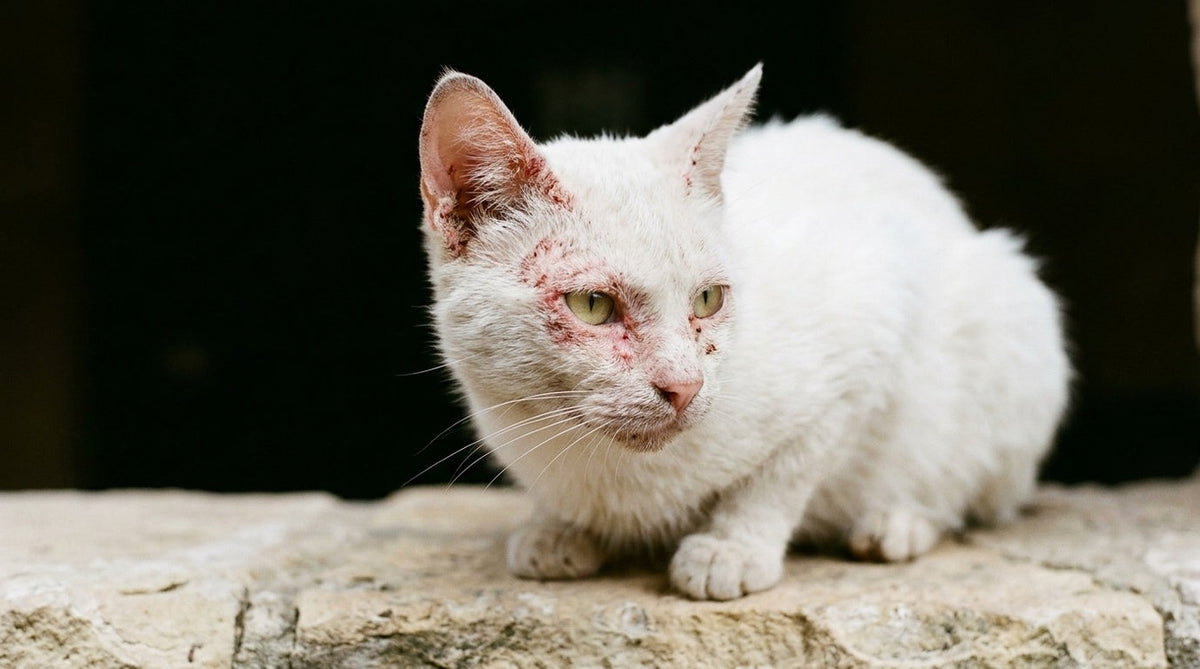
You have spotted little black flecks on your cat's chin, and now you are stuck trying to decide between acne and mites. Is it something you can handle at home, or does it need a vet? Relax a little: in most cases it turns out to be the gentler of the two.
Most owners have done the same thing, peering at a chin while the cat stares back, annoyed by the fuss. The good news is that you can usually figure out which problem you have this evening, with no appointment needed.
The information here was last reviewed in July 2026, and your own veterinarian should always have the final word on your cat's skin.
Quick Summary
- Acne shows up as small dark blackheads on the chin that resemble coffee grounds. Mites cause crusting, bald patches and plenty of scratching.
- A wet tissue resolves most doubts: acne flecks stay black and firm, whereas flea dirt leaves a rusty smear.
- Acne is frequently linked to a plastic dish. Mites, on the other hand, always call for a vet visit.
- Whatever the cause, bleeding, nonstop scratching, or hair loss that keeps spreading means it's time for an appointment.
Telling Acne and Mites Apart in Minutes
At first glance they can seem alike, yet each leaves its own evidence. Begin by looking closely.
Acne tends to look neat. You will find little blackheads, which vets call comedones, grouped on the chin and occasionally the lower lip. The skin may turn red, and more severe cases add pimples, pus-filled bumps or mild swelling.
Mites leave things looking rougher. Expect more redness, crusts, and frequently uneven bald spots with flaky, dandruff-like debris in the coat.
Next comes itchiness, the clue many owners overlook. Plain acne hardly bothers most cats, so they leave it alone. Mites are another matter: if your cat keeps scratching its chin, scrubs it along the rug, and has a bare patch that gets bigger, think mites or infection.
The wet tissue check
Owners rely on this simple trick. Dab the flecks with a moistened tissue or cotton pad and see what happens:
- If firm dark bits stick to the tissue and don't dissolve, you are almost certainly looking at acne, with blackheads lodged in the hair follicles.
- If you get a crumbly reddish-brown streak, it is flea dirt (digested blood), not acne. Grab a flea comb.
- If the flecks come with genuine bald areas and scaly skin instead of neat dots, mites become more likely.
To sum up: tidy black dots on a chin that otherwise looks calm, plus a plastic bowl at home, point to acne. Expanding bald spots and real itchiness point to mites or an infection.
Those clues are really all it takes to solve the acne-versus-mites question. Owners go through it all the time, and online cat forums are full of people helping each other figure it out.
How the Water Bowl Can Trigger Chin Acne
If the evidence says acne, the likely cause may be right beneath your cat's chin every time it eats or drinks.
Plastic is the prime suspect. It picks up scratches quickly, and within days those small grooves can shelter bacteria and develop a slimy biofilm. With every sip, your cat's chin rests against that same contaminated patch.
The rest is basic skin biology. Sebum, the natural skin oil, mixes with a protein called keratin and blocks the follicle. The sebaceous glands go into overdrive, the opening gets plugged, and the dark specks and redness appear. It is one of those feline skin problems that is easy to miss even though it is right in front of you.
Swap plastic for stainless steel
The solution is simple: change the surface your cat's chin touches. Stainless steel is much less likely to develop the fine scratches and pits where bacteria hide, so the greasy, germ-friendly film forms far more slowly.
This is where the Wireless Cat Fountain 2.0 comes in. Built from 304 food-grade stainless steel, it resists the scuffing and pitting that let bacteria settle, so the area your cat's chin touches stays cleaner between refills. Take that source away and chin acne frequently calms down by itself.
Food-grade steel holds up against the bacteria and biofilm that collect on plastic, and that buildup is what fuels chin acne to begin with. Keep in mind that a fountain helps with acne breakouts, not with mites, which still require a vet. And if your cat has been ignoring a still bowl, flowing water often brings it back to drinking.
If the chin keeps breaking out and your cat still uses plastic dishes, replace the plastic before anything else. A stainless steel fountain leaves nothing oily for the skin to rest on, which takes care of a big part of the acne problem. Move your cat to a stainless steel fountain and let the chin heal against a cleaner surface.
A Closer Look at Chin Mites, and Why They're Less Common
If your observations suggested mites, here is what you are likely facing. This path works quite differently.
When people say chin mites, they usually mean tiny Demodex mites that live in the skin. Demodex cati burrows deep into hair follicles and tends to appear when a cat's immune defenses are weakened. Demodex gatoi stays closer to the surface, causes itching, and can spread from cat to cat within a home. Another mite, Cheyletiella (often called walking dandruff), produces a scaly, flaky coat instead of acne-like bumps, and it passes readily between pets and sometimes to people.
Notoedres cati is yet another, the cause of notoedric mange, which is extremely itchy and generally begins on the face and ears.
With all of these, the main sign is alopecia, the veterinary word for hair loss. Instead of neat blackheads you will notice crusts and scratching, sometimes with an inflamed patch of folliculitis as well.
To be straightforward about it: mites are rarer than acne, but you cannot diagnose or treat them yourself from home.
Your vet will do a simple skin scraping to look for them, sometimes with cytology too. That result guides the correct prescription. Experimenting with whatever cream is in the cabinet usually prolongs the problem, so this is the path where you make an appointment.
Red Flags That Mean an Immediate Vet Visit
Regardless of which way you are leaning, certain signs take priority over home care. If you notice any of the following, phone your vet instead of waiting:
- Bald areas that are growing or worsening instead of staying the same.
- Severe, nonstop itching, or a chin rubbed raw.
- Blood, open wounds, discharge, or a firm, sore lump beneath the jaw.
- Symptoms moving beyond the chin onto the face, ears or body.
- No progress after two weeks of using a clean stainless bowl and gentle cleaning.
Mites, a hidden secondary infection, or anything that won't clear up by itself needs your vet. Looking at a skin scraping under a microscope is how vets distinguish Demodex from ordinary acne, and that one test answers what no photo online ever can.
Chin problems sometimes show up alongside other health changes. If you are already keeping an eye on something else, such as urinary issues or a change in appetite, bring it up during the same appointment.
Treatment: What You Can Do at Home vs. What Needs Prescriptions
Once you know whether it is acne or mites, the treatment plan becomes clear.
For uncomplicated acne, gentleness is key. Clean the chin every day with a soft wet cloth or a medicated wipe your vet suggests (chlorhexidine wipes are popular) to keep pores open. A warm compress can calm a flare.
Retire plastic dishes permanently, and resist squeezing or picking the bumps, which only drives bacteria further in. Most mild cases gradually get better within two weeks or so after the bowl is changed, although chin acne can return, so some cats need long-term care. If it doesn't improve, your vet can prescribe a stronger topical treatment.
Mites are a different story, and home remedies won't work. Your vet will confirm the type of mite with a skin scraping and prescribe the right antiparasitic medication, sometimes with additional treatment for a secondary infection. Attempting to treat possible mites on your own usually costs your cat valuable time.
Common Questions
Is chin acne contagious to my other animals?
No. It results from blocked follicles, not an infection your cat picked up, so neither your other pets nor you can catch it.
Does feline chin acne clear up without treatment?
Mild acne frequently fades once the trigger is gone, typically after switching to a clean stainless steel bowl and wiping the chin regularly. Persistent or infected acne needs a vet's help.
Does chin acne hurt my cat?
Mild acne is mostly a cosmetic annoyance rather than a painful problem. Redness, swelling or bleeding suggests infection, which genuinely hurts and warrants a vet visit.
How can I distinguish acne from flea dirt?
Dab the specks with a wet tissue. Acne blackheads remain dark and solid, while flea dirt turns into a reddish-brown smear since it is dried blood. If you see smearing, comb through the coat with a flea comb. Flea bites can also trigger a flea allergy.
Are chin mites contagious between cats?
Certain types are. Demodex gatoi and Notoedres cati can spread from one cat to another, whereas Demodex cati typically does not. Since it depends on the species, a skin scraping from your vet tells you whether your other pets are at risk. That test generally costs $50 to $150, and a definite answer is worth the price.